
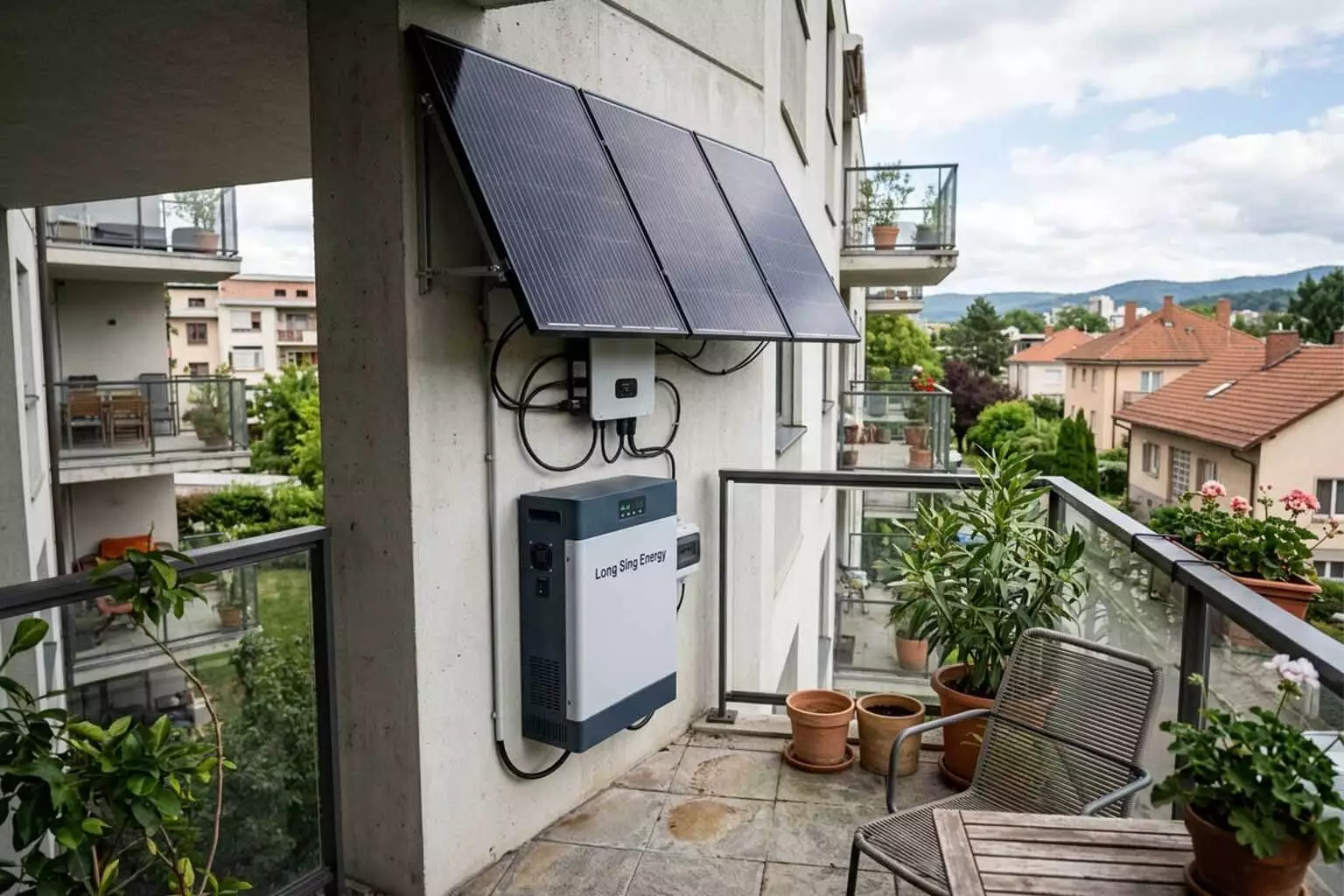
Many apartment dwellers invest in a balcony solar system only to see 70% of generated power flow back to the grid unused.
This gap between generation and consumption increases your electricity bill despite owning solar panels. The engineering solution lies in selecting the right coupling architecture for your plug-in solar battery storage system to push self-consumption above 93%.
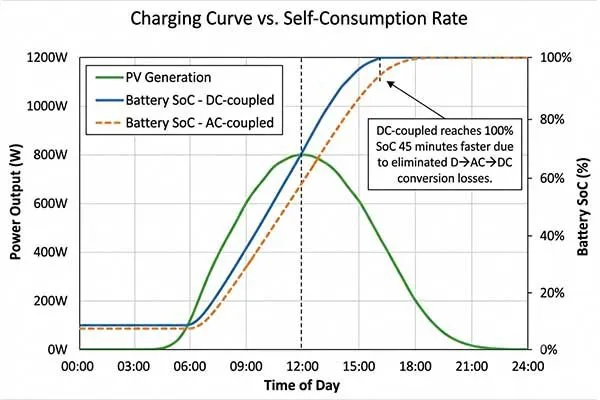
For a plug-in balcony solar battery storage system, DC coupling[1] typically delivers 2–5% higher round-trip efficiency than AC coupling[2] because it avoids double conversion from DC to AC and back.
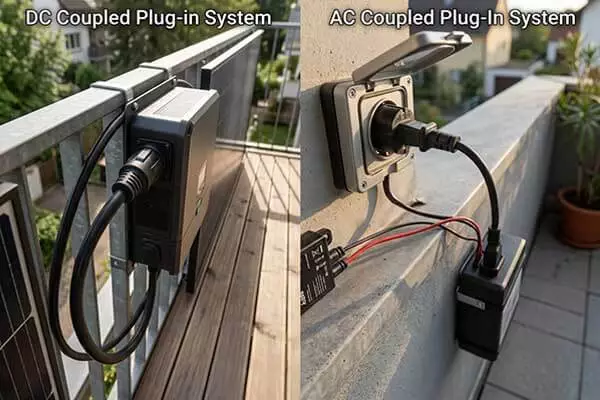
A DC-coupled system with an intelligent energy meter can achieve over 93% self-consumption. However, in Europe, AC-coupled plug-in systems are usually the easiest retrofit option because they connect on the AC side, fit existing microinverters, and avoid major rewiring.
A balcony solar battery storage system stores excess PV output during the day and discharges it later when household demand rises. The optimal design depends on your inverter, budget, and scalability goals.
Let’s break down how each coupling method impacts your daily energy flow and where efficiency losses actually occur.
Table of Contents
- 1. How Does a Balcony Solar System with Battery Storage Work?
- 2. What Is the ROI and Payback Period of a Balcony Solar Battery Storage System?
- 3. How to Customize OEM & ODM Balcony Solar Battery Storage Solutions?
1. How Does a Balcony Solar System with Battery Storage Work?
A balcony solar system with battery storage captures sunlight via plug-in panels, converts it into usable AC power, and stores surplus DC energy in a lithium battery.
In DC coupling, the solar charge controller feeds the battery directly before inversion; in AC coupling, the microinverter converts solar DC to AC first, then a battery inverter charges the battery. Both methods enable you to use solar energy after sunset, but DC coupling reduces conversion steps.
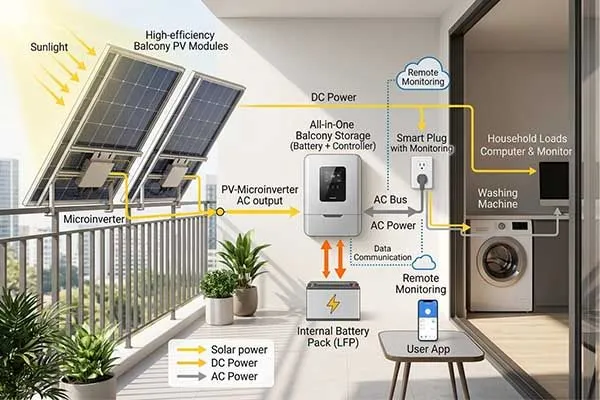
When you set up a plug-in-the-wall solar system, understanding power flow helps you avoid efficiency traps.
Plug-and-play Balcony Solar Battery Storage System Application Scenarios & Their Typical Loads
- Apartment Balcony Self-Consumption: LED lighting, Television, Wi-Fi routers, Laptop computers, Refrigerators, Kitchen appliances.
- High Electricity Price Peak-Shaving: Air conditioning systems, Washing machines, Dishwashers, Electric heaters, Home office equipment.
- Home Backup Power During Grid Outages: Emergency lighting, Mobile phone charging, Internet modem and router, Medical devices, Security systems
- Smart Home Energy Management: Smart thermostats, Smart lighting, Home automation systems, IoT devices, Smart plugs.
- Remote Work and Home Office Support: Desktop computers, Monitors, Network equipment, Printers, Video conferencing systems.
- EV and E-Bike Auxiliary Charging: E-bikes, Electric scooters, Portable power stations, Small EV charging accessories.
Why Battery Storage Improves Solar Self-Consumption?
Without a battery, a typical balcony solar system feeds excess generation into the public grid. Most European households achieve only 25–35% self-consumption because you are rarely at home during peak sun hours.
Adding a battery changes the energy curve: you store midday surplus and discharge it in the evening. The table below compares self-consumption and annual savings for a 600 Wp balcony solar setup in Germany.
| Configuration | Self-Consumption Rate | Annual Savings (€) | Battery Utilization |
|---|---|---|---|
| Without Battery | 32% | 85 | — |
| DC-Coupled 2 kWh Balcony Battery | 76% | 215 | 93% |
| AC-Coupled 2 kWh Balcony Solar System with Battery | 71% | 198 | 88% |
Common Technical Challenges and Solutions
Plug-in solar battery storage systems face limited wall-outlet capacity.
A typical Schuko plug[3] handles 2.5 A continuous, but the German VDE standard limits a balcony system to 800 W AC output. When a balcony battery charges at 800 W while the home draws additional load, the circuit can trip.
Solution: use a current sensor and energy meter that dynamically adjusts battery charging to respect the 800 W grid limit.
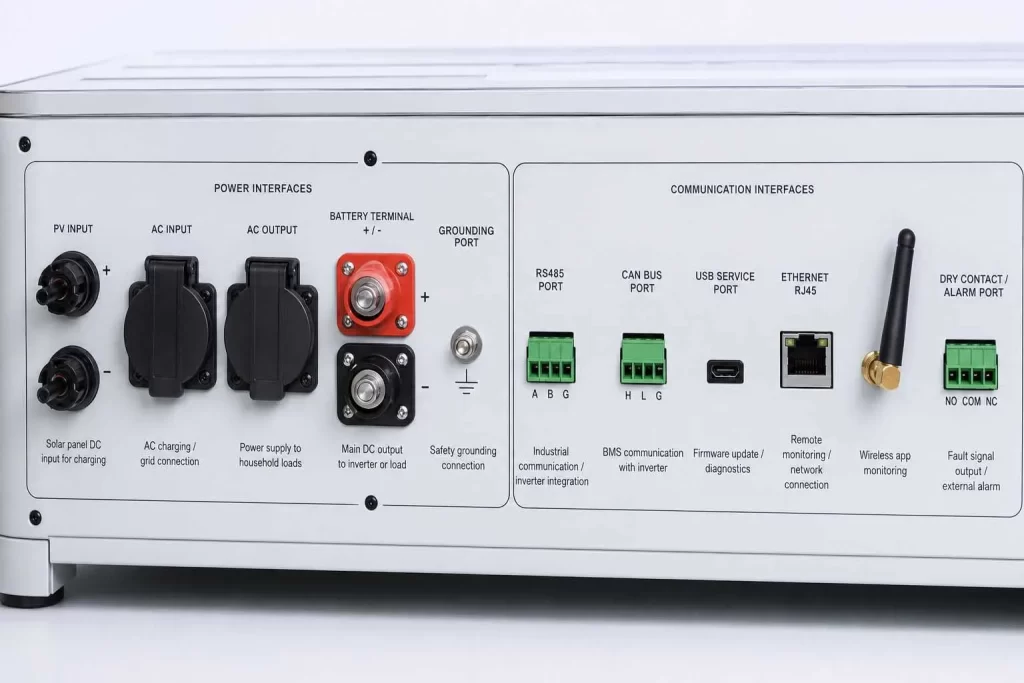
Communication mismatch between the inverter and battery is another pain point; always verify that the battery’s BMS supports CAN or RS485 protocols matching your inverter. Overvoltage during battery charging can degrade cells – a well-designed balcony battery with active balancing keeps cell voltage difference below 30 mV, extending cycle life.
Balcony Solar Regulations
In Germany and Austria, a balcony system must comply with VDE-AR-N 4105 and the 800 W AC feed-in limit. You need to register your plug-in solar system with the grid operator and use a certified inverter with NA protection.
The battery must be installed indoors or in a weatherproof enclosure (IP65) and be electrically isolated when the grid fails (anti-islanding[4]). A wall mounted home battery inside the apartment keeps the system tidy. These rules guarantee safety while you maximise self-consumption.
Optimize Your System Topology
Maximize round-trip efficiency with certified matching.
2. What Is the ROI and Payback Period of a Balcony Solar Battery Storage System?
A well-sized balcony solar battery storage system in Europe typically pays back in 6 to 8 years.
With a 2 kWh DC-coupled system and 35 eurocents/kWh electricity, you can save about €200 per year. Higher self-consumption rates above 75% accelerate payback; adding a battery can reduce payback by nearly 2 years compared to a panel-only balcony solar system.
A household battery storage must align with your daily consumption gap. For a typical two-person flat with a 600 Wp balcony solar system, a 2 kWh balcony energy storage system can shift about 1.5 kWh of solar energy battery storage from day to evening.
How Do Capacity Choice and Usage Patterns Affect Payback?
The table below models costs and returns for three common capacities at German electricity prices. A solar battery sizing calculator[5] can help you match battery capacity to your actual load profile before ordering.
| System Size | Hardware Cost (€) | Self-Consumption Gain | Annual Savings (€) | Simple Payback (years) |
|---|---|---|---|---|
| 1 kWh Balcony Battery | 620 | +35% | 110 | 5.6 |
| 2 kWh Balcony Solar Storage Battery System | 980 | +48% | 210 | 4.7 |
| 5 kWh Balcony Energy Storage System | 1,750 | +56% | 370 | 4.7 |
For DIY enthusiasts, a plug & play battery system snaps together without electrician intervention(no drilling required), saving installation cost. When your balcony solar power generation exceeds 300 W, the battery starts charging automatically, improving household battery storage utilization.
A high-quality home energy storage system like a balcony solar storage battery system keeps cycles within the optimal SOC window, preserving capacity for over 10 years.
Accelerate Project Payback
Get LCOS data sheets to prove your ROI.
3. How to Customize OEM & ODM Balcony Solar Battery Storage Solutions?
Custom OEM/ODM balcony solar storage battery systems let you define voltage, capacity, form factor, and communication protocol to match your inverter and apartment solar layout.
Working with a residential battery supplier like Long Sing Energy lets you tailor a plug-and-play battery for plug in solar system that fits European balcony regulations and plug-in-the-wall solar limits.
A balcony solar storage system is not one-size-fits-all. Voltage mismatch, limited space, and load profile dictate the design. A battery for plug in solar system must respect the 800 W AC output ceiling while delivering enough energy for evening baseload.
Matching Power, Size, and Load for Custom Balcony Storage
To customize balcony energy storage system, we start with three variables:
usable energy (kWh), maximum charge/discharge power (W), and physical dimensions.
For a balcony system, the battery must fit under a window or behind a door. A 1 kWh balcony battery suits a single person; a 2 kWh plug-in solar battery storage system serves a couple; a 5 kWh home energy storage system can cover a family with high evening consumption.
The battery’s BMS must communicate with the inverter via CAN bus to throttle charging when the apartment’s total load approaches the circuit limit.
How Long Sing Energy Maximize Self-Consumption
- Intelligent BMS & Precision Power Scheduling: Our self-developed Smart BMS integrates with home CT clamps (Current Transformers)[6] or smart meters via fast communication protocols (like CAN/RS485 or Wi-Fi/Bluetooth).
- High-Efficiency Multi-Channel MPPT (Maximum Power Point Tracking): Our system features optimized multi-channel MPPT controllers with wide voltage operational ranges.
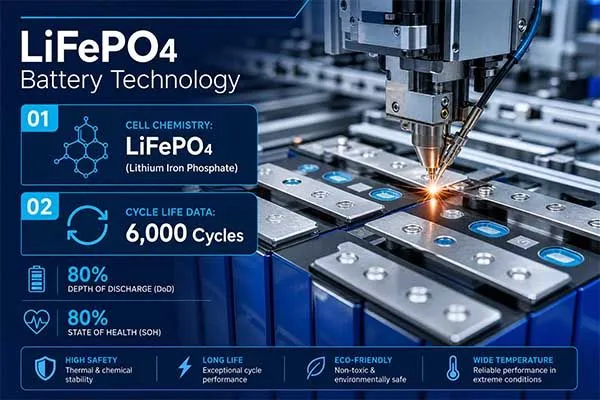
- True LFP (LiFePO4) Ultra-Long Cycle Life & Deep DoD: Utilizing premium Grade-A LFP cells featuring a cycle life of ≥3000 to 6000 cycles at 90%+ DoD (Depth of Discharge).
- Zero-Loss DC-Coupled Architecture: Direct DC-to-DC charging path from the solar panels to the storage battery.
Case: Utilization Challenge
A German balcony storage brand in Munich requested a 5 kWh stackable home battery, assuming more capacity equals better savings. Our sales manager Luke Liu analysed their load curve and discovered they actually needed higher battery utilization, not just more capacity.
He recommended the Long Sing Energy LS-F2560, a 51.2 V 50 Ah (2.56 kWh) balcony solar storage battery system, because its advanced cell matching and controlled SOC window could extract 93% usable energy from a smaller, more cost-effective package. The detailed specifications are listed below.
| Parameter | LS-F2560 Specification |
|---|---|
| Nominal Voltage | 51.2 V |
| Nominal Capacity | 50 Ah (2560 Wh) |
| Chemistry | LFP (LiFePO₄) |
| Max Charge Power (Recommended) | 800 W (from plug-in-the-wall solar input) |
| Max Charge Current | 35 A (BMS limited) |
| Max Discharge Power (Continuous) | 400 W (20 A) |
| Peak Discharge Current | 30 A (3 s) |
| SOC Window for Cycling | 10% – 90% |
| Cell Voltage Tolerance | ≤ 1% (after balancing) |
| Enclosure | IP65 Zinc Alloy |
| Weight | 29.75 kg |
| Communication | CAN 2.0 / RS485 |
| Warranty | 10 years |
| Expected Cycle Life | >6,000 cycles (80% DOD) |
| Inverter Compatibility Requirement | 48 V battery inverter, CAN protocol, adjustable charge voltage 56.8 V, discharge cut-off 46 V, max charge current setting ≤35 A |
By programming the inverter to keep the battery between 10% and 90% SOC and using LFP cells with capacity difference below 1%, the system achieves 93% battery utilization — matching the brand’s actual need without the cost of a 5 kWh stack.
The LS-F2560’s IP65 zinc alloy case allows safe installation on a balcony, and the CAN bus guarantees smooth communication with most hybrid microinverters. This plug-and-play balcony storage configuration reduced the brand’s upfront cost by 40% while delivering the same effective evening energy.
The same design principle applies to any balcony solar system with battery: define your load, size the battery accordingly, and fine-tune the SOC window and inverter limits to keep the system within safe operating boundaries.
A solar energy battery storage approach that emphasizes utilization over raw capacity often yields a faster payback and a more compact, apartment-friendly solution.
Frequently Asked Questions
Click to explore more information about Balcony Solar Battery System
Q: How does solar battery storage work?
A: Solar battery storage captures excess electricity generated by your solar panels during peak sunlight hours instead of sending it back to the grid. Long Sing Energy’s intelligent management systems store this DC electricity, convert it via an inverter, and discharge it to power your home during the night, during peak-rate hours, or during grid outages.
Q: Is it worth getting battery storage with solar?
A: Yes, adding battery storage highly maximizes your solar investment. It increases your energy independence by protecting you against rising utility grid rates and power outages. By storing your own clean energy to use when utility grid electricity is most expensive, you drastically cut down your monthly electricity bills.
Q: Are LiFePO4 batteries good for solar?
A: Lithium Iron Phosphate (LiFePO4) batteries are currently the gold standard for solar energy storage. Long Sing Energy utilizes LiFePO4 chemistry because it offers exceptional thermal stability, an ultra-long cycle life exceeding 6,000 cycles, zero maintenance requirements, and superior depth of discharge compared to traditional lead-acid alternatives.
Q: How much does a balcony solar system cost?
A: A standard balcony solar setup typically costs between €400 and €1,200, depending on the panel wattage and inverter capacity. If you choose to integrate a dedicated compact battery storage system for overnight power, the total initial investment generally ranges from €1,200 to €2,500, offering rapid payback periods through direct grid offsets.
Q: How long will a 10kWh battery last?
A: A 10kWh battery will typically power essential household appliances (such as a refrigerator, LED lighting, Wi-Fi router, and a TV) for roughly 10 to 12 hours. If powering heavier loads like central air conditioning or electric water heaters alongside daily essentials, a 10kWh capacity will typically sustain a home for about 2 to 4 hours.
Q: How to integrate a battery into balcony solar?
A: To integrate a storage battery, connect your balcony solar panels directly to a compatible solar charge controller or an all-in-one portable power station. The battery sits safely between the solar panels and your microinverter. The panels charge the battery first, and the intelligent microinverter pulls regulated power from the battery to feed directly into your home’s standard wall outlet.
Conclusion
To maximize self-consumption, choose DC coupling when building a new balcony solar battery storage system; it skips one conversion stage and yields over 93% efficiency. Match your battery capacity to your actual evening load—2 kWh often hits the sweet spot for two-person households.
Prioritize units with tight cell matching and programmable SOC windows, like the LS-F2560 example. Work with a residential battery supplier that offers OEM flexibility to adapt voltage, dimensions, and communication protocols. A well-engineered plug-in solar battery storage system pays for itself in under 5 years and makes your balcony a true household power plant.
Scale Your Brand Faster
Tier-1 cells, modular design, fast time-to-market.
Reference:
[1]Compare DC and AC coupling architectures to maximize battery charging efficiency.↪
[3]Understand electrical limits and safety requirements for Schuko-connected balcony solar systems.↪
[4]Learn how anti-islanding protection ensures safe operation during grid outages.↪
[5]Helps understand how battery sizing aligns with load profile and consumption patterns.↪
[6]Used for real-time household load monitoring in smart energy systems.↪
Keep reading further on energy storage system:
- Scalable Energy Storage Systems: Sustainable Lithium-Ion Solutions for Grid and Industrial ESS
- Wall Mounted Solar Battery System: What Are the Real Installation Challenges?
- How Does a LiFePO4 Stackable Battery System Work: Technical Guide
- AC Coupling vs DC Coupling Plug-In Balcony Solar Battery Storage System for Higher Efficiency?
- Grid-Connected BESS Container for Utility Substations: Design, Integration and Cost Analysis
- Complete Guide to Electric Boat & Marine Battery Systems Guide: Types, BMS & Selection