

Many homeowners and off-grid project owners are looking for reliable power alternatives but are often daunted by the complex installation process of energy storage systems – such as space constraints.
If not planned properly, your wall mounted solar battery system could face communication failures or serious structural safety hazards. We offer rigorously tested engineering solutions to help you easily avoid these costly trial-and-error expenses.
Common installation challenges include wall load-bearing[1] limitations, incompatible communication protocols, heat buildup, and inverter compatibility issues.
Accurately addressing these engineering challenges can significantly enhance the safety and lifespan of the entire system.
Next, we’ll provide a detailed breakdown of specific battery installation and communication technology solutions that can help you and your customers achieve safer, longer-lasting energy independence under three technical perspectives:
Electrical performance, thermal management, and structural load-bearing capacity.
Table of Contents
- What is a Wall-Mounted Battery and How Does It Work?
- Wall-Mount vs. Rack-Mount Batteries: Which is Best for Your Project?
- Safety & Installation Requirements: Can Your Wall Hold It?
- Why Choose Our Factory-Direct Wall Mounted ESS?
1. What is a Wall-Mounted Battery and How Does It Work?
A wall mounted solar battery system is a compact energy storage device that hangs directly on the wall, primarily responsible for capturing and storing electrical energy with a battery management system(BMS).
Through its system design, it works in conjunction with an inverter to convert solar DC power into AC power. Whether in areas with a weak grid or in completely off-grid cabins[2], it provides stable power support.
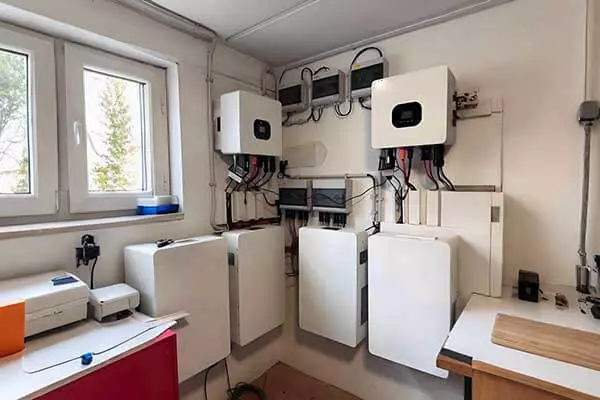
From a critical perspective, merely understanding the basic operating principles of a wall mounted solar battery system is far from sufficient, as engineering applications are fraught with unforeseeable variables.
For example, last year, a German manufacturer of residential solar energy storage systems reported a serious post-sales issue to us. During the cold winter, due to the significant temperature difference between indoors and outdoors, their system developed condensation on the wall surface. This not only caused corrosion of the standard wall-mounted battery casing but also led to severe oxidation between the connectors.
Our chief engineer, Jack Song, immediately stepped in, and after analysis, we determined this was a classic case of heat buildup on the wall surface. We provided them with an upgraded wall mounted solar battery system, which features a special moisture-resistant coating and a heat-dissipating backplate with rear ventilation slots, successfully resolving the condensation and heat buildup issues.
Need a Stable ESS for Weak Grid Projects?
Factory-matched battery and inverter integration.
At the same time, we have incorporated thermal runaway propagation prevention technology into the battery pack to ensure absolute safety under extreme conditions.
Many engineers overlook the fact that when they replace energy storage batteries, the entire system is highly susceptible to failure if a detailed CAN communication mismatch analysis is not performed.
To ensure that CAN communication remains stable after replacing our home solar power battery, we have individually tested and rewritten the underlying protocol code for mainstream inverters such as SMA and Victron.
Not only have we addressed physical corrosion issues, but we also guide their customers on how to configure their systems for vehicle-to-grid (V2G)[3] power supply and offer a warranty policy valid for up to 10 years.
Why CAN Communication Problems Are More Common Than Cell Failure?
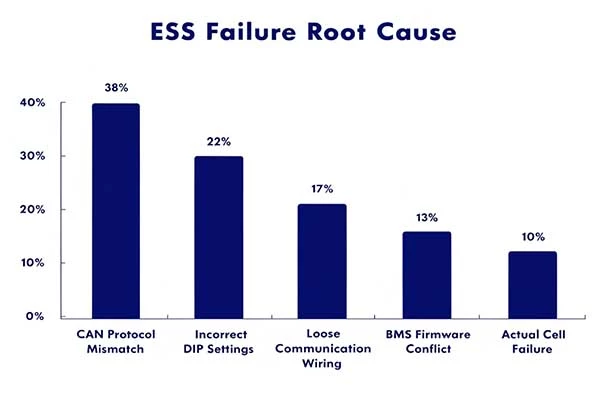
CAN communication mismatch[4] is the leading cause of wall mounted ESS failure in multi-brand installations. When the inverter and BMS use different CAN protocol versions (e.g., Pylontech vs. SMA vs. Victron profiles), the battery may report incorrect SOC, refuse to charge, or shut down unexpectedly. Cell failure, by contrast, typically takes years to manifest under normal cycling.
A CAN communication mismatch analysis reveals three common failure patterns:
- (1) baud rate mismatch[5] — most BMS default to 500 kbps, but some inverters expect 250 kbps;
- (2) address conflict when multiple battery modules share the same CAN ID;
- (3) missing heartbeat timeout, where the inverter disconnects the battery after 5 seconds of silence.
The fix is not hardware replacement. It is protocol mapping: either configure the BMS to output the inverter’s native CAN profile, or use a CAN gateway module that translates between protocols. Our wall mounted home energy storage system units ship with configurable CAN profiles covering Victron, SMA, Growatt, Deye, and Schneider — switchable via DIP or software.
Reduce Inverter Communication Downtime
Pre-tested CAN protocols for fast deployment.
2. Wall-Mount vs. Rack-Mount Batteries: Which is Best for Your Project?
A wall mounted battery suits residential, light commercial, and space-limited installations where floor area is premium.
A rack mount battery backup is better for telecom shelters, data closets, or sites needing modular capacity expansion above 30 kWh.
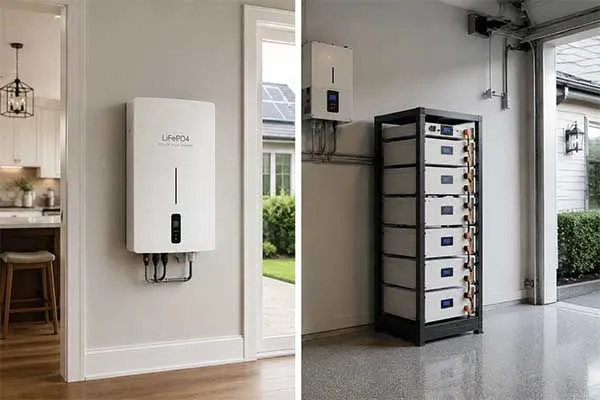
The choice depends on load size, available wall structure, thermal environment, and whether the project needs future scalability.
For projects under 20 kWh in residential ESS, a wall mounted home energy storage system wins on cost and simplicity. For anything requiring >4 parallel strings or operating in high-ambient environments above 40°C, rack mount battery backup with active thermal management is the safer choice.
When delving into the planning of energy storage projects, we must take a balanced view of the strengths and weaknesses of these two approaches.
Many installers blindly promote a single wall mounted solar battery system to all customers, overlooking the specific grid characteristics and actual load demands of a given region.
Wall-Mount vs. Rack-Mount
| Criteria | Wall Mounted Home Battery | Rack Mount Battery Backup |
|---|---|---|
| Typical Capacity | 5–20 kWh | 10–100+ kWh |
| Installation Space | Wall surface, no floor footprint | 19″/23″ rack, floor or cabinet |
| Thermal Management | Passive or light active cooling | Active cooling often required |
| Scalability | Limited by wall load rating | High — add modules to rack |
| Best Application | Residential ESS, LEV charging | Telecom, commercial, industrial |
| CAN Bus Topology | Single string, simple | Multi-string, needs master BMS |
Taking the South African market as an example, our sales manager Luke Liu discovered that the area faces frequent and severe load shedding. When dealing with this unique environment of unstable voltage in South Africa, the system must not only withstand massive surge impacts during grid restoration but also maintain an exceptionally long standalone runtime.
To achieve this, we must perform precise backup duration estimations. In the South African case, we calculated that a standard single wall-mounted lithium battery cannot meet the demand for a continuous 12-hour power outage. Therefore, we adopted a strategy of paralleling multiple home solar power batteries, but this places stringent demands on wall space.
In contrast, rack-mounted battery backup systems can be stacked more compactly to meet these high-capacity requirements.
Tips
Oversizing the battery by 15–20% improves backup runtime and reduces deep-cycle stress.
However, for residential ESS systems in most Western countries, an aesthetically pleasing wall-mounted home energy storage system remains the preferred choice. We need to take a balanced view of the pros and cons of solar wall batteries to help customers strike a balance between spatial aesthetics and storage capacity.
3. Safety & Installation Requirements: Can Your Wall Hold It?
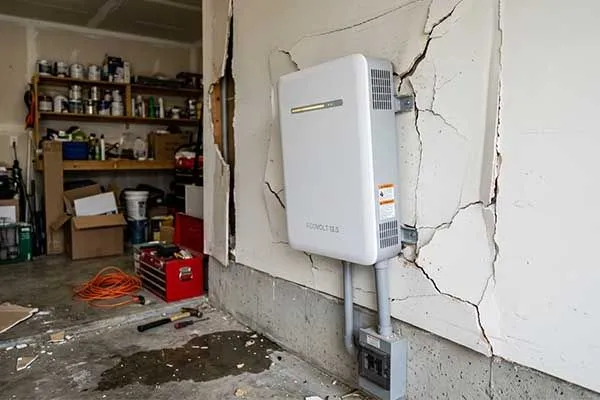
A 10 kWh lithium power wall weighs between 90–130 kg depending on cell format. Most residential drywall cannot support this.
Installation must use reinforced concrete, masonry, or a dedicated steel backing frame anchored to structural studs. Failure to verify this is the most common installation error we see in North American residential projects.
Tips
Concrete walls provide significantly better long-term mounting stability than hollow brick structures.
How to Properly Size a Wall Mounted Battery System?
To size a wall mounted battery storage system, calculate daily energy consumption (kWh), multiply by desired backup days, then divide by usable depth of discharge (typically 80–90% for LFP).
Add 15–20% margin for inverter losses and temperature derating. For example, a home using 15 kWh/day needing 1-day backup requires a minimum 18–19 kWh installed capacity.
Backup duration estimation formula:
Backup Hours = (Battery Capacity × DoD × η) ÷ Average Load (kW)
Where η = inverter efficiency (typically 0.93–0.96). A 10 kWh wall mounted lifepo4 battery at 90% DoD and 0.95 inverter efficiency powering a 2 kW average load gives: (10 × 0.9 × 0.95) / 2 = 4.275 hours of backup.
This calculation should be performed before any wall solar panels or inverter are sized, not after.
Common Failure Modes in Wall Mounted ESS Installations
| Failure Mode | Root Cause | Prevention |
|---|---|---|
| Inverter-BMS disconnect | CAN protocol mismatch | Use pre-mapped CAN profiles |
| Thermal shutdown | Poor wall ventilation | Maintain 150mm clearance, all sides |
| Connector oxidation | Wall condensation moisture | Use IP65 connectors, conformal coating |
| Capacity fade | Chronic overcharge | Set inverter float voltage ≤ BMS limit |
| Wall bracket failure | Inadequate anchor points | Torque to spec, use M10 structural bolts |
Thermal runaway propagation prevention deserves specific attention. LFP chemistry has significantly lower runaway risk than NMC, but wall-mount geometry concentrates heat.
Our design uses cell-level fusing, module-level temperature cutoffs at 60°C, and fireproof intumescent padding between the battery enclosure and the mounting wall. This limits fire spread to the battery enclosure itself rather than propagating to the building structure.
One case we can share in detail: a German residential solar energy storage manufacturer contacted us after their winter season showed corrosion on battery enclosure surfaces and oxidized connectors between modules.
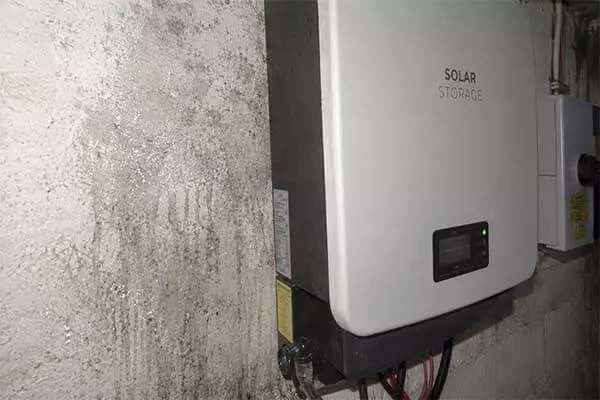
The root cause was wall condensation — cold masonry walls in German winters caused moisture to form on the enclosure back plate and connector housings.
We addressed this by recommending our LS-W10-LFP-48V model, which features a sealed IP65 enclosure[6] with stainless steel back plate, silicone-sealed connector boots rated for -20°C to 60°C, and a built-in 5W resistive heater on the BMS board that activates below 5°C to prevent condensation internally.
After switching to this unit, the customer also asked about CAN communication stability during inverter replacement. We provided a pre-flashed CAN profile card matching their Fronius Symo inverter, which eliminated the SOC reporting errors they had previously experienced.
Their system was also configured for grid feed-in under Germany’s §9 EEG regulation[7] — the inverter’s export control relay was set to release 70% of peak PV generation back to the grid, with the battery acting as a buffer.
Our warranty policy for this model covers cell capacity above 80% for 10 years or 4,000 cycles under standard residential cycling conditions, with remote diagnostics available via RS485 Modbus logging.
Prevent Structural Installation Failure
Verified mounting load and safety guidance.
4. Why Choose Our Factory-Direct Wall Mounted ESS?
By choosing to work directly with Long Sing Energy, you’ll receive a customized wall mounted solar battery system without the markups of middlemen.
We not only provide high-quality battery cells and BMS technology, but also offer direct technical support, a comprehensive warranty, and exceptional engineering customization services.
| Model | Chemistry | Capacity | Cycle Life | Max Charge | Max Discharge | Application |
|---|---|---|---|---|---|---|
| LS-W5-LFP-48V | LFP Prismatic | 5 kWh | 6,000+ cycles | 0.5C | 1C | Home solar power battery |
| LS-W10-LFP-48V | LFP Prismatic | 10 kWh | 6,000+ cycles | 0.5C | 1C | Residential ESS, solar wall battery |
| LS-W10-NMC-48V | NMC Cylindrical | 10 kWh | 3,500 cycles | 1C | 2C | Light EV charging, power wall |
| LS-W20-LFP-48V | LFP Prismatic | 20 kWh | 6,000+ cycles | 0.5C | 1C | Energy storage wall ESS |
In today’s highly competitive B2B market, selecting a reliable supplier is a strategic decision involving long-term risk management. Many distributors are merely middlemen; when your residential ESS project encounters the communication or thermal runaway issues mentioned above, they are simply unable to provide the underlying R&D support.
This is why choosing a factory-direct supplier with core engineering capabilities is crucial. When designing each wall-mounted battery, we subject it to cycle testing and aging tests under extreme conditions.
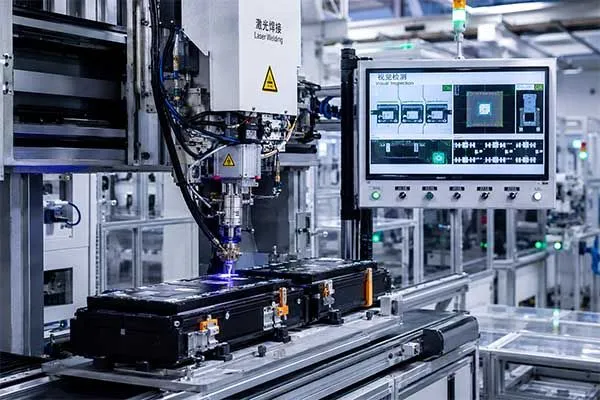
For example, our flagship model utilizes industry-leading LFP cells, offering a cycle life of over 6,000 cycles. It supports the highest continuous charge and discharge currents, easily handling the startup surges of high-power loads.
Long Sing Energy’s advantage on wall mounted solar battery system:
- Engineering-Focused ESS Design: Focuses on system-level engineering instead of only battery cell assembly.
- Advanced LiFePO4 Battery Integration Capability: Integrating complete wall mounted ESS solutions optimized for residential solar applications.
- Strong Thermal Management Optimization: Heat dissipation spacing optimization and internal hotspot reduction engineering.
- Inverter Compatibility Engineering: CAN Bus protocol optimization, firmware parameter adjustment and remote debugging support.
- OEM & ODM Customization Capability: Battery capacity, housing dimensions, logo branding, LCD display configuration, communication protocols, mounting structure, parallel expansion requirements, etc.
Frequently Asked Questions
Click to explore more information about AMR Robot Battery
Q:Can solar batteries be mounted on a wall?
A:Yes. Many LiFePO4 solar batteries from Long Sing Energy are designed for secure wall-mounted residential and commercial ESS installations.
Q:How long does a Powerwall last?
A:Most Powerwall-style lithium batteries last 10–15 years, depending on cycle life, temperature, and charging conditions.
Q:Which actual wall-mounted battery should I get?
A:Choose based on backup time, inverter compatibility, voltage, and daily energy use. Long Sing Energy offers customized ESS solutions.
Q:What are the risks of BESS?
A:Potential risks include thermal runaway, poor ventilation, overcharging, and installation errors without proper BMS protection.
Q:How long will a 400W solar panel take to charge a 100Ah battery?
A:A 400W panel typically charges a 12V 100Ah battery in about 3–5 peak sunlight hours under ideal conditions.
Q:How many wall mount batteries do I need to power a house?
A:Most homes need 1–4 wall-mounted batteries depending on daily consumption, backup duration, and appliance loads.
Q:Why are people against BESS?
A:Concerns usually involve fire safety, recycling challenges, project costs, and environmental impact from large-scale installations.
Q:How does BESS make money?
A:BESS systems generate revenue through peak shaving, energy arbitrage, grid services, and renewable energy storage optimization. ou can ask Long Sing Energy for more details.
Q:How long do BESS batteries last?
A:Most lithium-based BESS batteries last 10–20 years with proper thermal management and regular maintenance.
Conclusion
A wall mounted solar battery system is not just a product decision — it is a systems engineering decision. The wall structure, CAN protocol compatibility, thermal environment, and grid conditions all determine whether the installation succeeds or fails.
LFP chemistry, proper condensation protection, accurate backup duration estimation, and pre-mapped inverter communication profiles are the four variables that most consistently separate reliable deployments from costly callbacks. Get those right, and the energy storage wall does exactly what it promises.
Reference:
[1]Understand structural load-bearing requirements before installing heavy ESS units.↪
[3]Learn how V2G technology enables batteries to support the power grid.↪
[4]See how CAN communication mismatches can disrupt ESS performance.↪
[5]Learn why baud rate mismatches often cause inverter communication failures.↪
[6]Understand IP65-rated enclosures for weatherproof and moisture-resistant battery protection.↪
[7]Check Germany’s renewable energy regulations for grid feed-in compliance.↪
Keep Reading Further about Battery Energy Storage System
- Scalable Energy Storage Systems: Sustainable Lithium-Ion Solutions for Grid and Industrial ESS
- Wall Mounted Solar Battery System: What Are the Real Installation Challenges?
- How Does a LiFePO4 Stackable Battery System Work: Technical Guide
- AC Coupling vs DC Coupling Plug-In Balcony Solar Battery Storage System for Higher Efficiency?
- Grid-Connected BESS Container for Utility Substations: Design, Integration and Cost Analysis
- Complete Guide to Electric Boat & Marine Battery Systems Guide: Types, BMS & Selection