
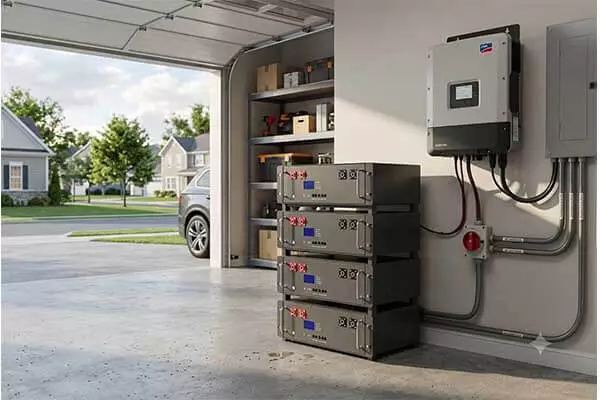
Energy demands rarely stay constant, yet fixed-capacity battery banks force you into costly overbuilds or risky shortfalls.
Power demands increase over time, but replacing entire systems wastes capital. Stackable battery systems help users grow storage capacity without rebuilding the whole installation.
A stackable LiFePO4 battery system works by connecting multiple independent modules in parallel or series through a centralized Battery Management System. This physical and electrical architecture allows users to easily add capacity.
The internal components actively monitor and balance current, voltage, and temperature across all stacked units to ensure safe energy discharge and provide reliable power for scalable energy storage applications.
Expansion dilemmas — current imbalance and heat buildup in upper layers — are managed through active balancing[1], forced-air cooling[2], and communication protocols that isolate aged cells to prevent mismatch. This design keeps the bank stable even when you grow from a single module to a full tower.
To overcome rigid capacity constraints, engineers deploy modular expansions. We will now explore the technical mechanisms that make these flexible industrial power networks highly reliable and structurally efficient.
Table of Contents
- What Is a Stackable Battery System?
- How Does a Stackable Battery System Work?
- Engineering Challenges of Stackable Battery Systems
- How to Choose the Right Stackable Battery System?
1. What Is a Stackable Battery System?
A stackable battery system is a battery architecture that lets multiple battery modules operate as one larger storage unit through mechanical stacking and electrical coordination.
In most cases, the concept supports stackable battery growth, stackable battery storage, and stackable lithium battery deployment without replacing the original system.
For many buyers, the attraction is simple: they can start small and add more capacity later.
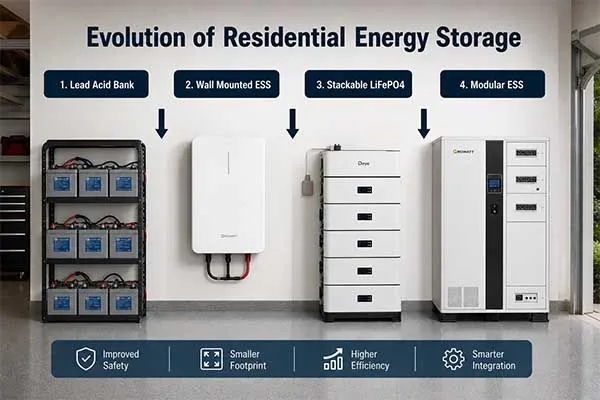
Advantages of Stackable LiFePO4 Batteries
Stackable LiFePO4 batteries are popular because they combine long cycle life, stable chemistry, and practical expansion planning.
The strongest benefits are scalability, easier installation, lower expansion cost, and flexible capacity growth, which is why many installers treat them as a stackable solar battery option for homes and light commercial sites.
Looking for a Scalable Energy Storage Solution?
Expand capacity without replacing existing batteries.
Industrial Applications of Stackable Battery Systems
A stackable battery system can support commercial ESS, telecom backup, microgrid projects, solar energy Storage, factory backup power, and similar loads that value staged growth. In C&I energy storage, the same idea also supports procurement planning because a buyer can deploy a modular battery system[3] first and extend the bank later if the load profile changes.
| Application | Industry / Sector | Example Products / Devices | Use Case / Notes |
|---|---|---|---|
| Commercial ESS | Commercial Buildings, Retail, Data Centers | Wall-mounted energy storage units, modular battery racks, UPS systems | Provides load shifting, peak shaving, and backup power for critical operations |
| Telecom Backup | Telecommunications, 5G / 4G Infrastructure | Base station backup batteries, modular telecom battery packs, edge computing UPS | Ensures uninterrupted service during grid outages; scalable for tower clusters |
| Microgrid Projects | Remote Communities, Industrial Parks, Islanded Power Systems | Stackable battery modules integrated with local generation, microgrid controllers | Supports grid-independent operation, peak load management, and renewable integration |
| Solar Energy Storage | Residential, Commercial Solar Farms, Off-Grid Systems | Modular solar battery packs, hybrid ESS combining inverters and batteries | Stores excess solar power, stabilizes grid input, enables energy autonomy |
| Factory Backup Power | Manufacturing, Warehouses, Industrial Automation | High-capacity modular batteries, UPS-integrated battery racks | Prevents downtime in production lines; powers critical machinery during outages |
| Others | Healthcare, Transportation, IoT & Smart Devices | Portable medical equipment, electric forklifts, UAVs, AGVs, IoT sensor nodes | Enables mobility, flexible deployment, and reliable backup in critical applications |
2. How Does a Stackable Battery System Work?
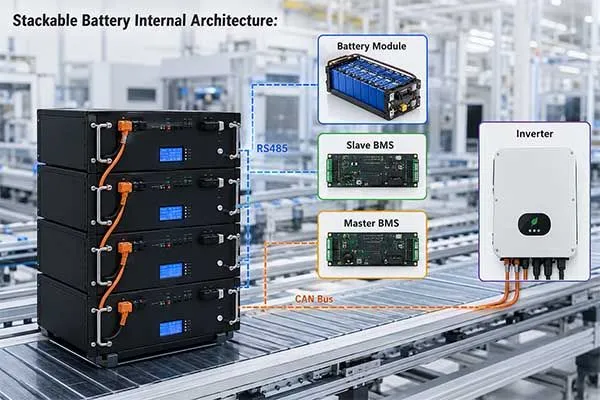
A stackable system works by combining battery modules, a master BMS, slave BMS units, and a defined communication protocol into one coordinated storage structure.
The modules deliver the energy, while the control layer manages charge limits, discharge limits, alarms, balancing, and interlock behavior so the bank behaves like one modular energy storage system.
Stackable Battery Internal Architecture
Battery modules and power path
Each module contains cells, contactors or protection devices, temperature sensing, and local control logic. In a typical rack mounted battery or rackmount battery format, the power path is arranged so current can move through common DC rails or parallel terminals, depending on the design.
The basic goal is to keep voltage and capacity predictable while allowing the user to add modules in a controlled way.
Master BMS and slave BMS
The master BMS acts like the system coordinator, while the slave BMS units collect data from individual modules.
This arrangement is important because the master must see current, voltage, temperature, and fault data from every unit before it can authorize charging or discharging. That coordination is what makes BMS coordination central to safe expansion.
Tips
Always match battery SOC within 5% before parallel connection to minimize equalization current and reduce BMS stress.
Communication protocol and control
The communication layer often uses CAN, RS485, or a proprietary bus so the battery can talk to an inverter, PCS, or EMS. This matters in scalable energy storage because the control system needs to know when the pack is full, when a module is out of balance, and when a protection threshold is reached.
Without reliable communication, the pack may still power loads, but it will not scale safely.
Stackable Battery vs Modular Battery
A stackable battery focuses on physical add-on expansion, while a modular battery emphasizes system architecture and serviceable subunits.
In practice, many products are both, but the difference matters when comparing upgrade paths, cabinet layout, and replacement strategy. A stackable design is usually the simpler route for staged capacity growth, while modular designs often fit broader OEM integration needs.
| Topic | Stackable battery | Modular battery |
|---|---|---|
| Main idea | Physical stacking and add-on capacity growth | Serviceable building blocks within a larger system |
| Best use | Staged residential and light commercial expansion | OEM platforms and larger energy systems |
| Upgrade approach | Add compatible modules over time | Extend or reconfigure system blocks |
| Risk focus | Mechanical stability and current sharing | Control integration and replacement consistency |
For buyers comparing modular vs stackable battery systems, the real question is whether the next expansion must be simple or whether the platform must support deeper engineering integration.
A modular battery can be excellent, but it still needs the same discipline around balancing, communication, and voltage matching.
Master Parallel & Series Stacking
Seamless BMS communication for true modular voltage & capacity expansion.
3. Engineering Challenges of Stackable Battery Systems
The hardest engineering problems are thermal management, current balancing, voltage consistency, and mechanical stability.
These issues become more visible as the stack grows, because each added module changes heat flow, contact resistance, and the burden on the BMS. That is why expansion limits are not marketing details; they are engineering boundaries.
Thermal management
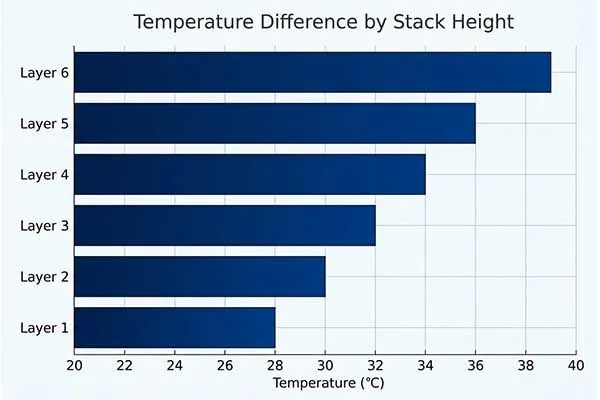
When too many modules are stacked too tightly, the center of the stack can become a heat accumulation area. Heat leaves the outer surfaces more easily than the middle, so the deeper modules may run warmer and age faster.
In a stackable battery system, higher temperature also raises the risk of performance drift and protection trips.
Current balancing
If parallel modules do not share current evenly, one module may work harder than the others. That can happen because of cable resistance, contact resistance, SOC mismatch[4], or firmware mismatch.
In stackable battery storage, current imbalance may look small at first, but it slowly creates unequal aging and lower available capacity.
Voltage consistency
Voltage consistency matters because LiFePO4 cells and modules should stay within a narrow operating window. If one older module has lower capacity, it may reach cutoff earlier than the rest and force the whole bank to stop early.
That is one reason a stackable LiFePO4 battery should not be treated like a loose collection of similar boxes.
Mechanical stability
The taller the stack, the more pressure and vibration sensitivity the system faces. A poor mechanical design can loosen busbars, shift module alignment, or stress connectors over time.
For this reason, a rack mount battery backup design is not only about packaging; it is also about structural repeatability and safe service access.
Expansion limitations
How many layers can be stacked?
The true limit depends on the enclosure, load path, thermal design, and BMS approval, not on how many boxes physically fit. Some products may advertise a high stack count, but the safe operating limit is the one validated by the manufacturer and inverter partner. This is where a server rack battery 48v platform must be evaluated as a system, not as a single battery.
How is current shared?
Current should be shared through matched modules with similar cable length, identical firmware, and synchronized SOC. If one module has lower internal resistance, it may accept or deliver more current than the others unless the BMS and bus architecture correct for it. In a 48v rack mount battery setup, small wiring differences can still affect load sharing.
Can new and old batteries be mixed?
In most cases, mixing old and new modules is not the best choice. Older modules usually have lower capacity and different internal resistance, so they can become the weak link during charge or discharge. Mixing is especially risky when the bank lacks per-module isolation or when the rackmount battery vs rackmount UPS comparison shows that the system was never designed for hot-swappable mismatch handling.
What about capacity differences?
Capacity differences create imbalance because the stronger module may finish charge later and finish discharge sooner under the same control logic. If the BMS is not designed for mixed-capacity operation, the whole stack may be forced to follow the weakest module. That is why expansion should be planned in pairs or matched groups whenever possible.
When should mixing be avoided?
Mixing should be avoided when the age gap is large, the chemistry is different, the firmware is different, or the SOC spread is wide at installation. It should also be avoided when the pack already shows abnormal temperature rise, repeated imbalance alarms, or inconsistent communications. In those cases, expansion should move to a separate bank rather than a shared one.
Overcome Real-World Stacking Issues
Eliminate thermal runaway risks and communication faults in modular arrays.
Human-readable engineering view
Why stack height changes risk?
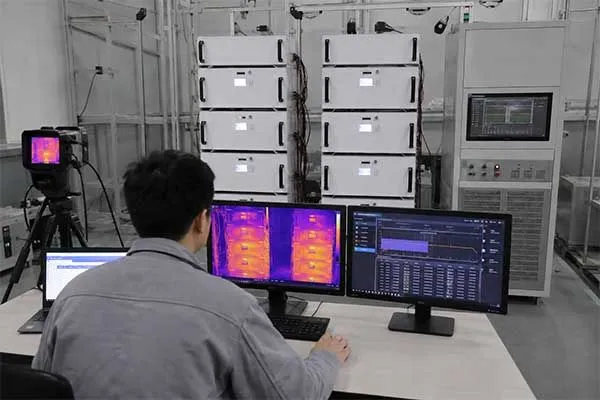
As the stack gets taller, the lower modules carry more structural load and the middle modules lose cooling advantage. That changes both mechanical pressure and thermal behavior, which is why a stackable 48V battery storage project needs a realistic installation envelope. The issue is not only total capacity; it is also whether the stack can stay uniform over years of cycling.
Why the BMS must coordinate every module?
The BMS does more than protect cells from overcharge and overdischarge. It also coordinates charge acceptance, discharge limits, fault isolation, and communication with the inverter or EMS. In a modular energy storage system, that coordination is what keeps growth predictable when the customer wants to add modules later.
| Engineering issue | What happens in a stack | Practical consequence |
|---|---|---|
| Heat accumulation | Middle modules cool less effectively | Higher aging and earlier derating |
| Current imbalance | One module carries more load | Uneven wear and lower usable capacity |
| Voltage inconsistency | Weak module reaches cutoff first | System stops early |
| Mechanical stress | More pressure on frame and connectors | Higher risk of loosening and faults |
4. How to Choose the Right Stackable Battery System?
Start with the load profile, the inverter protocol, the future growth target, and the physical installation space. Then verify that the vendor can show safe parallel limits, communication compatibility, and clear operating rules for new module addition.
A buyer who treats this as an engineering purchase instead of a commodity purchase usually gets a better result.
For procurement, ask for these five items: maximum stack count, supported protocols, expansion procedure, allowed age spread, and thermal derating[5] guidance. If the supplier cannot explain those points clearly, the system may still work on day one but fail during expansion.
For example, when I discuss expansion planning with European buyers, I usually recommend a staged approach instead of a single oversized purchase.
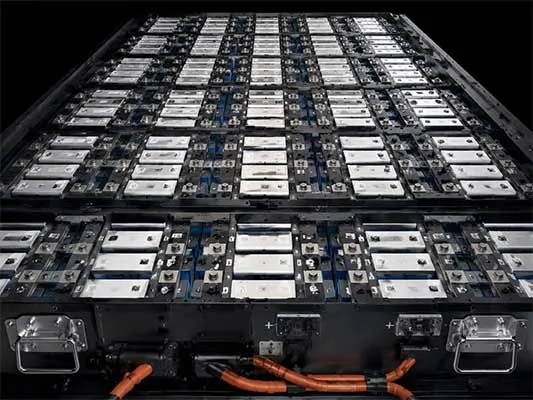
In Germany, high electricity prices and frequent home-storage expansion make buyers look for imported batteries more often, and our common export combinations range from small pack builds around 10Wh to 100Wh for control, monitoring, and auxiliary use, up to larger rack and cabinet systems for home and C&I storage.
When we guide them, we first check inverter protocol, then module matching, then reserve room for future growth, because scalable energy storage is only useful when the upgrade path is still electrically and thermally safe.
When comparing suppliers, Long Sing Energy supports both product customization and engineering communication. For wall-mounted product families, an OEM stackable battery system manufacturer should still be able to explain stacking rules, BMS logic, and the expansion ceiling with the same clarity as a rack product team. That engineering consistency matters more than a polished brochure.
Secure Tier-1 Cells For Commercial Deployment
UL1973 and IEC62619 certified factory direct.
Frequently Asked Questions
Click to explore more information about Stackable Battery System
Q: What is a stackable battery?
A: A stackable battery is a modular energy storage system designed to be easily stacked vertically to expand capacity. Long Sing Energy’s stackable batteries allow users to start with a base unit and add more modules as energy needs grow, offering flexible, scalable power solutions for homes, businesses, and off-grid applications.
Q: Is it okay to stack batteries?
A: Yes, it is safe and recommended when using properly designed stackable systems like those from Long Sing Energy. Our batteries feature built-in safety mechanisms, secure interlocking designs, and advanced BMS (Battery Management System) to ensure stability, thermal management, and protection during stacking.
Q: How do stacking batteries work?
A: Stacking batteries from Long Sing Energy works through modular connectors that link each unit electrically and mechanically. The system automatically recognizes additional modules, allowing parallel or series configurations depending on the setup. This provides seamless capacity expansion without complex rewiring.
Q: Does stacking batteries increase voltage?
A: In most Long Sing Energy stackable configurations, stacking increases overall energy capacity (kWh) in parallel while maintaining system voltage. However, specific models can be configured in series to increase voltage when needed. Always follow the product manual or consult our team for the best configuration.
Q: Can batteries be stacked on top of each other?
A: Yes. Long Sing Energy’s stackable lithium batteries are engineered with reinforced structures and safety locks, making them safe and stable to stack directly on top of one another up to the manufacturer-recommended height.
Q: How does stacking batteries on top of one another give a greater output?
A: Stacking increases total energy storage capacity, allowing the system to deliver more power over a longer period or support higher loads. Long Sing Energy’s modular design combines the output of all stacked units, resulting in greater overall energy availability, longer backup time, and improved system performance.
Conclusion
A stackable LiFePO4 battery system works because battery modules, BMS layers, and communication protocols act as one coordinated storage platform. Its main value is expansion, but expansion only works well when thermal limits, current sharing, voltage consistency, and mechanical stability are engineered from the start.
Buyers should treat stack height, module matching, and BMS coordination as design constraints, not afterthoughts. The best system is the one that can grow safely, stay balanced, and support the real load profile over time.
Reference:
[1]Understand active balancing techniques to manage cell mismatch and heat.↪
[2]Learn how forced-air cooling improves stackable battery reliability.↪
[3]Explore modular storage solutions for scalable industrial energy networks.↪
[5]See how temperature affects battery performance and lifespan.↪
Keep reading further on Energy Storage System
- Scalable Energy Storage Systems: Sustainable Lithium-Ion Solutions for Grid and Industrial ESS
- Wall Mounted Solar Battery System: What Are the Real Installation Challenges?
- How Does a LiFePO4 Stackable Battery System Work: Technical Guide
- Which is Better: AC Coupling vs DC Coupling Plug-In Balcony Solar Battery Storage System for Higher Efficiency?
- Grid-Connected BESS Container for Utility Substations: Design, Integration and Cost Analysis
- Complete Guide to Electric Boat & Marine Battery Systems Guide: Types, BMS & Selection