
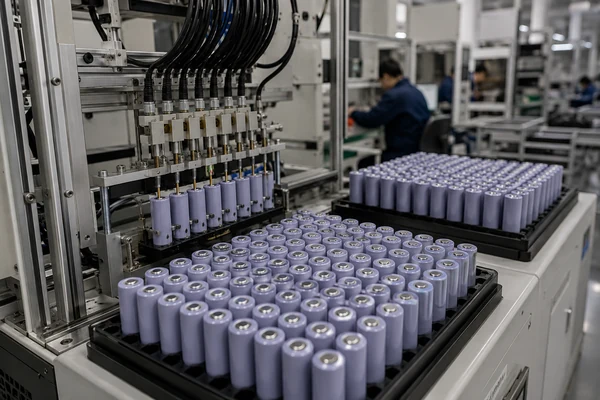
Even brand-new lithium cells of the same model are not electrically identical, which is why battery cell matching is essential for reliable lithium battery pack design. Small differences in capacity, voltage, resistance or self-discharge can become pack-level problems once cells are connected in series or parallel, reducing usable capacity and causing early BMS cut-off.
Battery cell matching is the process of grouping cells with sufficiently similar capacity, open-circuit voltage (OCV), internal resistance and other relevant characteristics before pack assembly. Capacity affects usable energy, OCV helps indicate electrical-state consistency, and ACIR provides a fast production-screening measure of resistance. These parameters should be evaluated together rather than used individually.
The objective is not to make every cell numerically identical, but to prevent one weak cell or series group from limiting the entire lithium battery pack.
Table of Contents
- Why Do Lithium Battery Cells Need Matching Before Pack Assembly?
- What Do Capacity, OCV and ACIR Tell You About Cell Consistency?
- How Does Cell Mismatch Affect Series and Parallel Battery Packs?
- How Should a Battery Pack Factory Perform Battery Cell Matching Before Assembly?
1. Why Do Lithium Battery Cells Need Matching Before Pack Assembly?
Lithium battery cells need matching because cells of the same chemistry, model and production lot can still differ in capacity, state of charge, self-discharge and impedance. Once assembled into a multi-cell pack, these small differences can determine which cell reaches its voltage limit first and therefore how much of the pack’s theoretical capacity is actually usable. [1]
This is particularly important in custom lithium-ion battery packs using cylindrical cells such as 18650 battery cells and 21700 battery cells, as well as prismatic lithium cells.
Same Model Does Not Mean Same Electrical Behavior
A cell datasheet defines a product specification range. It does not mean every individual cell leaving production has exactly the same:
- Measured capacity
- Open-circuit voltage
- Internal resistance
- Self-discharge rate
- Initial state of charge
- Temperature response
- Aging behavior
Manufacturing tolerances, formation history, material variation, storage conditions and handling can all contribute to cell-to-cell variation.
Texas Instruments notes that even cells from the same manufacturer, model and production batch can differ in capacity, impedance, self-discharge and state of charge. For deeper technical background, see the Texas Instruments cell-balancing technical guidance.
Buying cells of the same brand and model is not the same as completing pack-level cell matching.
For a battery-pack manufacturer, the question is therefore not only:
“Are these the correct cells?”
but also:
“Are these individual cells electrically consistent enough to operate together in this pack?”
Why Capacity Mismatch Can Reduce Usable Pack Capacity
Capacity describes how much charge a cell can deliver under defined test conditions.
In a series-connected battery pack, the same current flows through every series cell or series group. If one group has lower actual capacity than the others, its state of charge moves through the usable range faster.
During discharge:
Lower-capacity group
↓
Reaches low SOC first
↓
Cell voltage approaches the BMS undervoltage limit
↓
BMS stops pack discharge
↓
Other groups may still contain usable energy
During charging, the reverse problem can occur: one cell or group can reach its upper-voltage limit before the others are fully charged.
The result is that the pack’s usable energy can be constrained by the first cell group that reaches its allowable voltage boundary rather than by the average capacity of all cells. [2]
In a series-connected pack, usable capacity is limited by the cell or parallel group that reaches its voltage limit first.
Why “The Pack Still Has Voltage” Does Not Mean Every Cell Is Healthy
Pack voltage is the sum of the individual series-group voltages.
That total can still look acceptable even when one weak series group is approaching its undervoltage threshold.
Most groups may retain reasonable voltage, while a lower-capacity or higher-resistance group falls more quickly under load. Once that group crosses the BMS protection threshold, the BMS should disconnect the load to protect the battery.
A pack can still show acceptable total voltage while one weak series group has already reached the BMS cut-off limit.
The same principle can appear during charging if one group reaches its upper-voltage threshold first.
Cell matching can therefore influence:
- Usable pack capacity
- Charging completion
- Runtime consistency
- BMS cut-off behavior
- Cell-balancing demand
- Long-term pack consistency
2. What Do Capacity, OCV and ACIR Tell You About Cell Consistency?
Capacity, OCV and ACIR describe different aspects of cell behavior. Capacity measures charge-storage capability, OCV provides information about the cell’s electrical state under no load, and ACIR is a fast way to screen resistance consistency. None of these three parameters should be treated as a complete cell-quality indicator by itself.
What Does Capacity Matching Tell You?
Capacity matching compares the actual measured charge or discharge capacity of individual cells under controlled conditions.
A meaningful capacity test requires consistent:
- Charging protocol
- Upper cut-off voltage
- Rest period
- Discharge current or C-rate
- Lower cut-off voltage
- Temperature
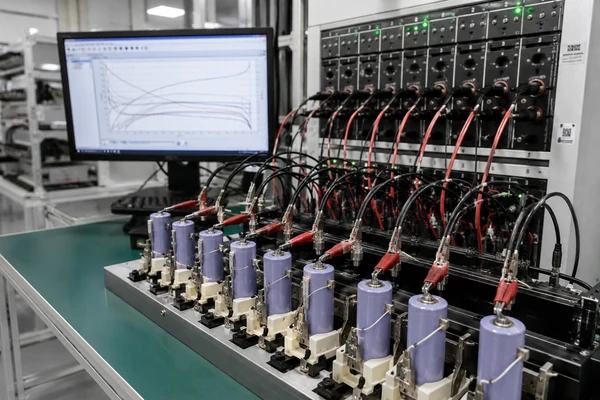
Without controlled test conditions, two measured Ah values may not be directly comparable.
Capacity matching is especially important in series packs because a lower-capacity cell or parallel group can move through its SOC range faster than its neighbours.
The key question is:
How closely do the usable capacities of cells grouped into the same pack align under the same test conditions?
Capacity matching alone, however, is not sufficient.
Two cells can have similar measured Ah values but different:
- Internal resistance
- Self-discharge behavior
- Voltage response under load
- Aging characteristics
What Does OCV Tell You?
OCV, or open-circuit voltage, is the terminal voltage of a cell measured without an external load.
In battery production and incoming inspection, OCV can help identify differences in:
- Initial electrical state
- Approximate SOC under appropriate conditions
- Storage behavior
- Abnormal self-discharge
OCV becomes more meaningful when measured after a defined rest period and under controlled temperature conditions.
A single OCV measurement provides one snapshot. A second measurement after aging or controlled rest can provide another useful parameter:
ΔOCV over time
An abnormally large voltage decrease compared with similar cells can indicate unusual self-discharge behavior. Hioki describes OCV monitoring during lithium-ion cell aging as a method for identifying cells with abnormal self-discharge characteristics. [3]
For additional technical background, see Hioki’s lithium-ion battery OCV testing guidance.
Why Similar OCV Does Not Mean Similar Capacity
This distinction is important.
Two cells may have nearly identical OCV at the time of measurement while having different:
- Actual capacity
- Internal resistance
- Self-discharge
- Aging condition
Voltage matching alone cannot replace capacity and resistance matching.
This limitation is particularly relevant to chemistries such as LiFePO₄, where parts of the OCV-versus-SOC curve are relatively flat. A small voltage difference does not necessarily prove that two cells have identical SOC or usable capacity.
OCV should therefore be interpreted as one screening dimension—not as proof that two cells are fully matched.
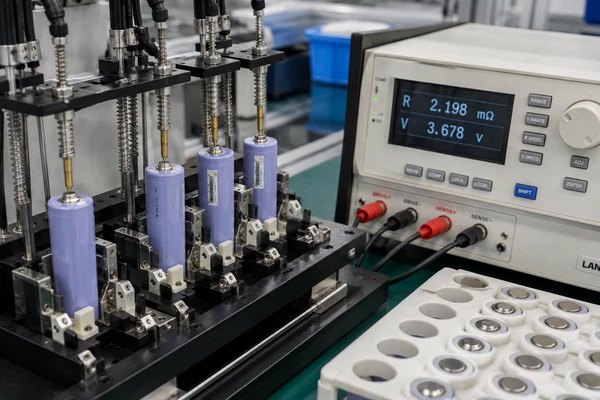
What Is ACIR?
ACIR means AC internal resistance.
A common production measurement applies a small AC signal, often around 1 kHz, and measures the cell’s impedance response.
The method is widely used for production screening because it is:
- Fast
- Non-destructive
- Repeatable under controlled conditions
- Suitable for high-throughput sorting
For lithium-ion cells, a 1 kHz ACIR test primarily provides information about the relatively high-frequency or ohmic resistance component. [4]
For a deeper explanation of the measurement method, see Keysight’s lithium-ion internal resistance measurement guide.
Why Internal Resistance Matching Matters
Under load, resistance contributes to voltage drop.
A useful first-order relationship is:
ΔV ≈ I × R
where:
- I = current
- R = effective resistance
- ΔV = load-induced voltage drop
If two series cells carry the same current but one has higher effective resistance, the higher-resistance cell experiences greater voltage sag.
Under high discharge current, this can cause it to approach the BMS undervoltage threshold earlier.
Resistance also contributes to heat generation. A simplified relationship is:
P ≈ I²R
This means resistance variation becomes increasingly important as pack current rises.
ACIR Is Not the Same as DCIR
This distinction should not be overlooked.
ACIR generally uses a small AC excitation and is highly useful for fast production screening.
DCIR uses a larger current step or pulse and evaluates the cell’s voltage response under a more application-relevant load.
A lithium-ion cell does not behave as one ideal resistor. Depending on the measurement method and time scale, the observed response can include:
- Ohmic resistance
- Charge-transfer effects
- Polarization
- Diffusion-related effects
Measured resistance can also vary with:
- SOC
- Temperature
- Cell age
- Measurement frequency
- Test duration
1 kHz ACIR is a fast production-screening metric; it is not a complete substitute for application-relevant DCIR or pulse testing.
For a high-power battery pack, engineers may additionally need:
- DCIR testing
- Pulse-current testing
- Voltage-sag measurement
- Thermal validation
- Application load-profile testing
Capacity vs OCV vs ACIR
| Parameter | What It Mainly Tells You | Useful For | What It Cannot Prove Alone |
|---|---|---|---|
| Capacity | How much charge a cell can deliver under defined conditions | Energy matching | Load resistance or self-discharge consistency |
| OCV | No-load electrical state | Voltage / SOC screening | Equal capacity or equal resistance |
| ΔOCV after aging | Voltage change over time | Abnormal self-discharge screening | Full capacity or pulse capability |
| ACIR | High-frequency resistance consistency | Fast cell sorting | Complete load-dependent internal resistance |
| DCIR / pulse response | Voltage response under current load | High-power validation | Long-term capacity by itself |
Capacity, OCV and ACIR describe different dimensions of cell consistency. None should be interpreted in isolation.
3. How Does Cell Mismatch Affect Series and Parallel Battery Packs?
Cell mismatch affects series and parallel packs differently. In series strings, capacity and resistance differences primarily influence which cell reaches the voltage limit first. In parallel groups, resistance and SOC differences can influence how current is shared between cells, creating uneven electrical and thermal loading.
What Happens in a Series-Connected Pack?
In a series string:
- The same current passes through each series cell or group
- Individual cell voltages add together
- Capacity and resistance differences create different voltage trajectories
A lower-capacity cell can reach low SOC sooner.
A higher-resistance cell can exhibit more voltage sag under the same current.
Either condition can result in one cell or series group reaching a BMS limit before the others.
During charging:
One group reaches the maximum cell voltage first
↓
Charging is reduced or stopped
↓
Other groups may not yet be fully charged
During discharging:
One group reaches the minimum cell voltage first
↓
BMS disconnects the load
↓
Other groups may still retain usable charge
This is one reason pack-level Ah should not be evaluated only from the nominal capacity printed on an individual cell datasheet.
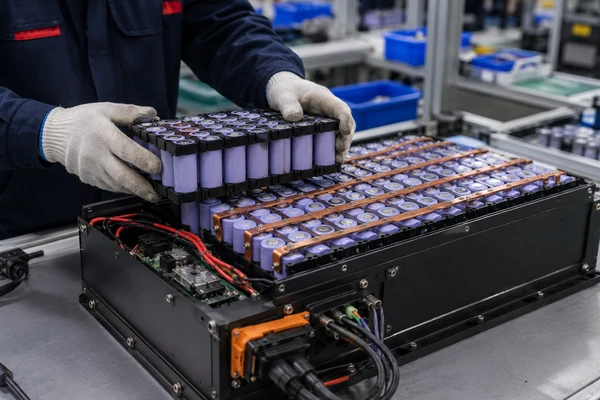
What Happens in Parallel-Connected Cells?
Parallel-connected cells share the same terminal voltage, but they do not necessarily share current equally.
Current distribution can depend on:
- Cell internal resistance
- Interconnect resistance
- Contact resistance
- SOC
- Temperature
- Cell condition
If one parallel cell has lower effective resistance than another, it may carry a greater share of transient current.
Peer-reviewed research on parallel-connected lithium-ion cells has shown that resistance mismatch affects current sharing and can influence long-term cell behavior. [5]
Unequal current sharing can contribute to differences in:
- Heat generation
- Cycling stress
- SOC trajectory
- Aging rate
Series vs Parallel: How Mismatch Appears
| Mismatch Type | Series Connection | Parallel Connection |
|---|---|---|
| Capacity mismatch | Lower-capacity group reaches SOC limit sooner | Can influence charge distribution and usable group capacity |
| OCV / SOC mismatch | Causes different voltage trajectories | May produce equalization current when cells are connected |
| Resistance mismatch | Creates different voltage sag at the same current | Creates unequal current sharing |
| Likely pack-level effect | Early BMS cut-off and reduced usable energy | Uneven electrical and thermal loading |
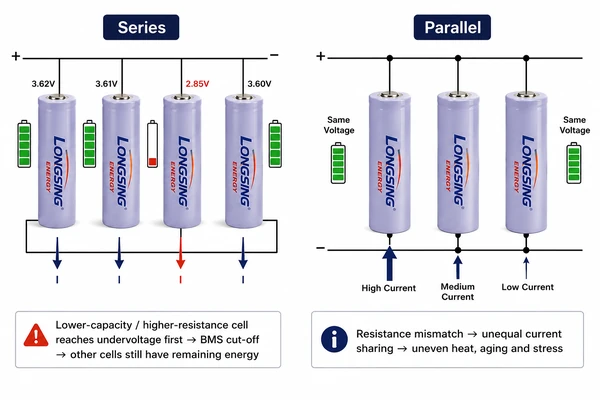
Real pack behavior also depends on interconnect resistance, BMS strategy, temperature distribution and the application’s load profile.
Can Cell Mismatch Accelerate Uneven Aging?
Yes. Initial differences do not necessarily remain constant throughout the battery’s life.
If one cell carries more current or operates at a higher temperature, it can age differently from neighbouring cells.
This can create a feedback process:
Initial variation
↓
Uneven current / temperature / SOC
↓
Uneven degradation
↓
Larger capacity or resistance spread
Cell matching cannot eliminate every future aging difference, but reducing the initial parameter spread gives the pack a more consistent starting point.
Cell Matching Is Not Cell Balancing
These two terms are often confused.
Cell matching happens before or during pack assembly.
It means selecting and grouping cells with sufficiently similar electrical characteristics.
Cell balancing happens after cells are already connected in a series battery pack.
The BMS may use passive or active balancing to reduce differences in cell SOC or voltage. [6]For industrial battery packs requiring communication and monitoring, BMS interface selection is also an important design consideration. Read our guide on CAN vs RS485 for Lithium Battery BMS.
Analog Devices provides additional technical background on passive battery cell balancing.
Balancing is valuable, but it does not eliminate fundamental differences in:
- Cell capacity
- Internal resistance
- Self-discharge
- Aging condition
A lower-capacity cell does not become a higher-capacity cell simply because its voltage is balanced.
Likewise, a high-resistance cell does not become electrically identical to its neighbours.
A BMS can manage cell imbalance; it cannot turn badly mismatched cells into truly matched cells.
4. How Should a Battery Pack Factory Perform Battery Cell Matching Before Assembly?
A battery pack factory should define matching criteria around the actual application and use controlled measurements to screen, grade and group cells before assembly. A typical process can include incoming verification, OCV and resistance screening, capacity grading, aging or self-discharge checks, cell sorting, pack assembly and end-of-line validation.
The exact tolerances and test sequence should depend on the cell chemistry, pack topology, current requirement, service life and the manufacturer’s validated quality process.
Step 1: Incoming Cell Verification
Incoming cells should first be checked against the approved specification and traceability requirements.
Typical checks can include:
- Cell manufacturer and model
- Production lot
- Physical condition
- OCV
- ACIR
- Identification and traceability
OCV and ACIR are widely used in lithium-ion cell production and grading because they can be measured rapidly and consistently when test conditions are controlled. [7]
Do not compare OCV or ACIR values measured under different conditions as if they were directly equivalent.
ACIR, in particular, should be compared under controlled:
- SOC
- Temperature
- Frequency
- Rest condition
- Measurement setup
Step 2: Capacity Test and Grading
Where required by the manufacturer’s quality process, cells can be subjected to a controlled charge/discharge test to establish actual capacity.
The factory can then:
- Identify under-capacity cells
- Group cells with similar measured capacity
- Retain test results for traceability
The required tolerance should be based on the application and validated manufacturing specification.
A high-energy ESS pack, a high-power robotics pack and another industrial lithium battery do not necessarily require identical sorting criteria.
For that reason, matching rules such as:
- “Capacity must always be within 1%”
- “OCV must always be within 5 mV”
- “ACIR must always be within 2 mΩ”
should not be treated as universal requirements unless they are tied to a specific cell, test method, pack architecture and validated production specification.
Step 3: Aging and Self-Discharge Screening
After formation, charging or capacity testing, cells may undergo a defined rest or aging period.
OCV can then be measured again.
The purpose is not simply to check whether the cell voltage remains “high.” The useful parameter can be:
Change in OCV over a defined time interval
A cell showing unusual voltage decline relative to comparable cells may require further investigation for abnormal self-discharge.
A cell may pass an initial OCV check yet reveal abnormal behavior only after a controlled rest period.
Step 4: Multi-Parameter Cell Sorting

Cells that pass screening can then be grouped according to parameters relevant to the application.
Typical sorting dimensions may include:
- Measured capacity
- OCV
- ACIR
- ΔOCV / self-discharge behavior
- Production lot
- DCIR or pulse response for demanding applications
Cell matching is multi-parameter screening—not one-number sorting.
For custom prismatic battery packs and other industrial battery systems, matching criteria should reflect the intended duty cycle.
An energy-storage battery and a high-current industrial pack may place different emphasis on:
- Capacity consistency
- Resistance consistency
- Pulse behavior
- Thermal behavior
Step 5: Pack Assembly and Interconnect Control
Good cell matching can still be undermined by poor pack assembly.
Once matched cells are grouped, the factory should also control:
- Busbar design
- Nickel or copper interconnects
- Welding quality
- Contact resistance
- Cell positioning
- Thermal paths
- Series / parallel topology
In parallel groups especially, uneven interconnect resistance can influence current sharing even when the individual cells are closely matched.
Pack consistency depends on both cell consistency and assembly consistency.
Step 6: BMS and End-of-Line Pack Validation
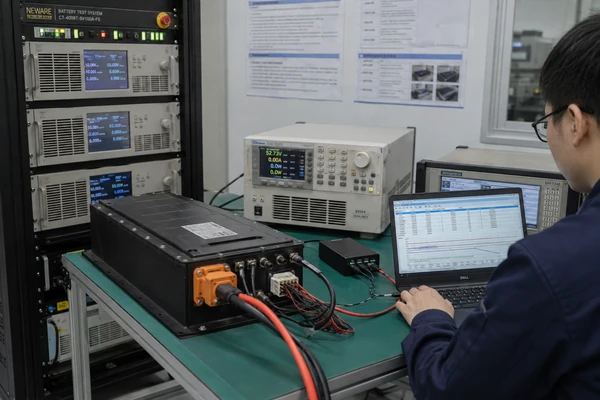
After assembly, pack-level testing should confirm that the complete battery behaves as intended.
Depending on the product, validation may include:
- Individual series-group voltage
- Charge / discharge operation
- Pack capacity
- Pack resistance
- BMS communication
- Protection thresholds
- Balancing operation
- Voltage spread under load
- Thermal behavior
- End-of-line functional testing
This provides the final check that cell sorting, interconnects, pack assembly and BMS configuration operate as one battery system.
What Should an OEM Buyer Ask a Battery Pack Supplier?
A buyer evaluating a custom battery pack manufacturer can ask:
- Which parameters are used for cell matching?
- Are capacity, OCV and resistance checked separately?
- At what stage is OCV measured?
- Is aging or self-discharge screening used?
- How are ACIR measurements controlled?
- Is DCIR or pulse testing used for high-current applications?
- How are cell lots and test data traced?
- How are matched cells assigned to series and parallel groups?
- What pack-level tests are performed after assembly?
- How does BMS balancing complement cell matching?
These questions provide more useful information than simply asking:
“Do you use Grade-A cells?”
because cell grade alone does not describe the actual pack-level matching process.
LONGSING Website B currently covers 18650 cells, 21700 cells, prismatic lithium batteries and custom lithium battery packs, while Precision Cell Matching and Automated Production & Testing are presented as factory capabilities. [8]
Exact matching tolerances, aging duration and cell-sorting acceptance criteria should still be confirmed for each specific battery project rather than assumed from general product information.
Conclusion
Battery cell matching helps prevent one weak cell or series group from limiting an entire lithium battery pack. Capacity, OCV and ACIR provide different information about cell consistency, while high-power applications may also require DCIR or pulse testing. Effective pack production combines controlled cell screening with reliable interconnects, BMS configuration and end-of-line validation rather than relying on cell model or voltage matching alone.
Frequently Asked Questions About Battery Cell Matching
1. What is battery cell matching?
Battery cell matching is the process of grouping cells with similar electrical characteristics before assembling them into a battery pack. Common matching parameters include capacity, open-circuit voltage (OCV), internal resistance or ACIR, and sometimes self-discharge behavior. Better-matched cells help improve pack consistency, usable capacity, and long-term reliability.
2. Why is cell matching important in lithium battery packs?
Cells connected in series or parallel do not always age or perform identically. If one cell has lower capacity or higher internal resistance than the others, it may reach voltage limits earlier and reduce the usable performance of the entire battery pack. Cell matching helps minimize these differences before pack assembly.
3. What parameters should be checked when matching lithium battery cells?
The main parameters normally include cell capacity, open-circuit voltage (OCV), and internal resistance such as ACIR or DCIR. Depending on the application and quality-control process, manufacturers may also evaluate self-discharge, voltage stability after aging, batch consistency, and temperature behavior.
4. What is OCV matching in a battery pack?
OCV matching means grouping battery cells with similar open-circuit voltages before pack assembly. Large voltage differences can indicate differences in state of charge, self-discharge, or cell condition. OCV is therefore one useful screening parameter, although it should not be used alone to determine whether cells are properly matched.
5. Why does ACIR matter when matching 18650 or 21700 cells?
ACIR is one method used to evaluate a cell’s internal resistance. Cells with significantly different resistance can experience different voltage drops and heat generation under the same current load. In high-current 18650 or 21700 battery packs, resistance consistency can be particularly important for maintaining stable pack performance.
6. Can cells from the same brand and model be assembled without matching?
Not necessarily. Even cells with the same model number can have small differences caused by manufacturing tolerances, production batches, storage conditions, or aging. For demanding battery-pack applications, cells should still be inspected, graded, and matched according to defined manufacturing criteria.
7. Can a BMS compensate for poorly matched battery cells?
A BMS can monitor cell voltages and may provide balancing functions, but it cannot fully compensate for major differences in cell capacity, internal resistance, or degradation. Good cell matching and an appropriate BMS should work together rather than treating balancing as a substitute for proper cell selection.
8. How does cell matching affect battery pack cycle life?
Better cell consistency can reduce the likelihood that individual cells repeatedly reach upper or lower voltage limits earlier than the rest of the pack. This helps the battery system use its available capacity more evenly and can support more stable long-term performance. Actual cycle life, however, also depends on cell chemistry, temperature, charge and discharge rates, depth of discharge, and BMS strategy.
Reference: