
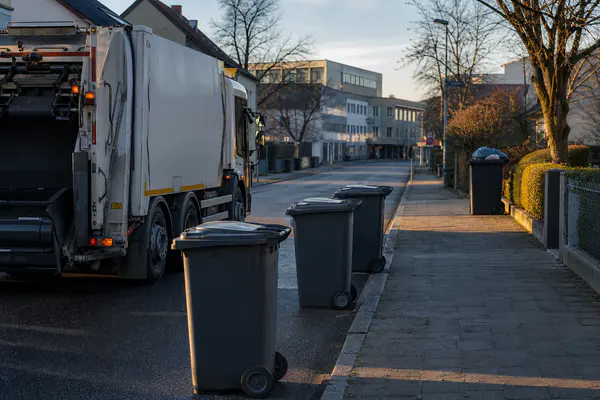
How real-time fill-level monitoring, IoT connectivity, dynamic route optimization, and reliable battery power influence collection efficiency, field maintenance, and total lifecycle cost.
Fixed waste-collection schedules send trucks to half-empty containers while other bins overflow, increasing fuel use, labor hours, complaints, and waste collection costs. Without dependable field data, routes remain reactive. Smart waste management replaces assumptions with real-time fill-level insight and demand-based planning.
Smart waste management can reduce waste collection costs by using real-time fill-level monitoring to identify which containers need service. Reliable field devices send data that supports on-demand collection and dynamic route optimization, helping operators avoid unnecessary stops, prioritize overflow risks, and use vehicles and crews more efficiently. Results vary with fleet structure, route density, network coverage, and local waste patterns.
Below is how the operating model, data flow, field power, and battery selection decisions fit together.
Table of Contents
- Why Are Traditional Waste Collection Operations So Expensive?
- How Does Smart Waste Management Reduce Collection Costs?
- Why Does Battery Reliability Affect Smart Waste Management ROI?
- How Should OEMs Select Power Solutions for Smart Waste Devices?
1.Why Are Traditional Waste Collection Operations So Expensive?
Traditional collection often follows a calendar rather than actual container status. Trucks may travel to underfilled bins, while faster-filling locations overflow before the next visit. This mismatch raises waste collection costs through avoidable mileage, fuel, crew time, complaints, and emergency dispatches, while limiting efficient use of vehicles and containers.
Fixed Schedules, Underfilled Bins, and Overflow Risks
A fixed route assumes that waste accumulates predictably. In practice, fill rates change with location, season, events, weather, and user behavior. A container at an office site may remain underfilled while one near a transit hub reaches capacity early. Visiting both on the same schedule wastes resources; delaying the second can create litter, complaints, and unplanned work.
The scale makes this operational mismatch important. The World Bank reports that municipal waste-management costs already exceed US$250 billion annually and may reach US$426 billion by 2050 under existing practices[1]. Eurostat reports that the EU generated 517 kilograms of municipal waste per person in 2024[2]. Smart waste management does not remove the need for collection, but it can improve the information used to schedule it.
Main Cost Drivers in Traditional Waste Collection
Vehicle mileage and fuel consumption rise when trucks make unnecessary container stops. Driver and crew hours are also consumed by travel, access, lifting, and inspection, even when little material is collected. Overflow complaints and emergency trips add unplanned labor, while stop-start operation contributes to vehicle wear. Static schedules can therefore leave vehicles, crews, and containers poorly matched to actual demand.
| Operating factor | Fixed-schedule collection | Demand-based collection |
|---|---|---|
| Service trigger | Calendar or preset route | Container status and operating rules |
| Underfilled stops | More likely | Can be deprioritized |
| Overflow response | Often reactive | Alerts can support earlier action |
| Asset use | Based on fixed assumptions | Adjusted using field data |
2.How Does Smart Waste Management Reduce Collection Costs?
Real-time data lets operators decide when and where collection is needed. In smart waste management, connected bins report status to a platform that can prioritize nearly full containers, issue alerts, and support dynamic route planning. These functions can reduce avoidable stops and improve asset utilization when the data, connectivity, and operating rules are dependable.
From Fill-Level Data to Dynamic Route Planning

A practical smart waste management data chain is: fill-level sensor → controller → LoRaWAN or NB-IoT communication → cloud platform → collection alert → route planning. The sensor observation becomes useful only after it is processed, transmitted, interpreted against service thresholds, and incorporated into dispatch decisions.
For the measurement principles behind the first step, see how smart waste bins detect fill levels.
LoRaWAN[3] and NB-IoT[4] are designed for low-power, long-duration IoT applications. However, network coverage, reporting policy, retries, and device configuration affect energy use and data availability. IoT waste management therefore requires coordination between hardware, connectivity, platform logic, and collection operations.
Where Can Operational Savings Occur?
Field data may help operators reduce unnecessary stops, prioritize nearly full containers, respond to overflow risks, improve vehicle utilization, reduce avoidable mileage, and adjust collection frequency[5]. Historical patterns can also inform container placement, fleet planning, and whether a site needs more or fewer containers. These benefits support smart waste collection without assuming that every route or site behaves identically.
The effect on waste collection costs depends on container count, route density, communication coverage, waste-generation patterns, vehicle costs, and existing collection practices. Route-planning software can improve decisions, but it cannot compensate for inaccurate sensors, missing data, unsuitable service thresholds, or operational constraints. No universal savings percentage applies to every deployment.
| Smart function | Operational use | Possible cost influence |
|---|---|---|
| Fill-level monitoring | Identify service need | Fewer low-value stops |
| Collection alerts | Prioritize overflow risks | Fewer emergency responses |
| Dynamic route planning | Sequence selected containers | Lower avoidable mileage |
| Historical analysis | Adjust frequency and placement | Better asset utilization |
3.Why Does Battery Reliability Affect Smart Waste Management ROI?
A smart waste management platform depends on field devices remaining powered and connected. When a smart bin sensor stops reporting, the platform may treat stale or missing data as current information. That can undermine route decisions, shorten maintenance intervals, and raise total cost of ownership even when the software and network are functioning correctly.
The Hidden Cost of Battery-Related Downtime

Unreliable power can cause missing readings, delayed alerts, communication failures, and inaccurate route priorities. It may also trigger emergency maintenance visits, extra labor, shorter service intervals, and reduced confidence in the monitoring platform. For IoT waste management, field power is therefore part of data quality—not merely a component procurement issue.
Nominal capacity alone does not determine battery service life. An energy model should consider sleep current, measurement frequency, transmission intervals, communication current pulses, signal strength, network retries, operating temperature, self-discharge, connector resistance, battery aging, and the actual device duty cycle. GSMA battery-life measurement guidance likewise evaluates current consumption across representative device operations[6].
Illustrative Failure Analysis: An Outdoor Smart Waste Sensor Deployment
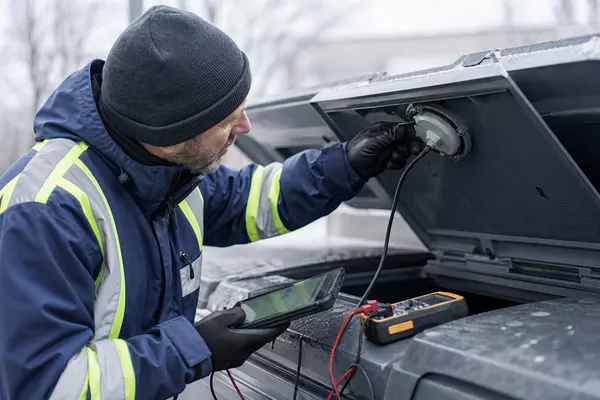
Illustrative engineering scenario—not a disclosed LONGSINGX customer project.
- Country: Germany
- Industry: Municipal waste management
- Equipment: Outdoor battery-powered smart waste bin fill-level sensor
- Communication: LoRaWAN or NB-IoT
- Failure symptom: Premature power loss or an unexpected voltage drop during winter operation
The review uses duty-cycle current logging, communication peak-current testing, low-temperature simulation, connector inspection, contact-resistance checking, and analysis of wireless retry frequency. The engineering finding is that the original estimate relied mainly on average current and nominal capacity; it did not fully account for communication pulses, low-temperature behavior, signal retries, or connection losses.
The improvement process is to recalculate the energy budget, evaluate pulse-current capability, review the battery configuration, optimize the connector and wiring, and validate samples under representative load and temperature conditions. This disciplined approach helps separate battery, connection, network, and duty-cycle effects within a smart waste management deployment without disclosing confidential specifications.
| Test item | Observed condition | Possible effect | Recommended engineering review |
|---|---|---|---|
| Duty-cycle current logging | Elevated | Energy use exceeds estimate | Recalculate the full load profile |
| Communication peak current | Review required | Temporary voltage drop | Evaluate pulse-current capability |
| Low-temperature simulation | Unstable | Reduced available performance | Review battery configuration and temperature range |
| Connector inspection | Normal | No visible mechanical defect | Continue electrical verification |
| Contact resistance | Review required | Connection loss under load | Optimize connector and wiring |
| Wireless retry frequency | Elevated | Additional transmission energy | Review coverage, antenna, and retry settings |
| Representative sample validation | Pass | Improved design meets test criteria | Document validation conditions |
4.How Should OEMs Select Power Solutions for Smart Waste Devices?
The power solution should match the complete device load profile, operating environment, installation requirements, and expected maintenance interval. For smart waste management devices, selection should account for both low average consumption and short communication loads, as well as the physical and environmental conditions that influence field performance.
What Information Should OEMs Provide to a Battery Supplier?
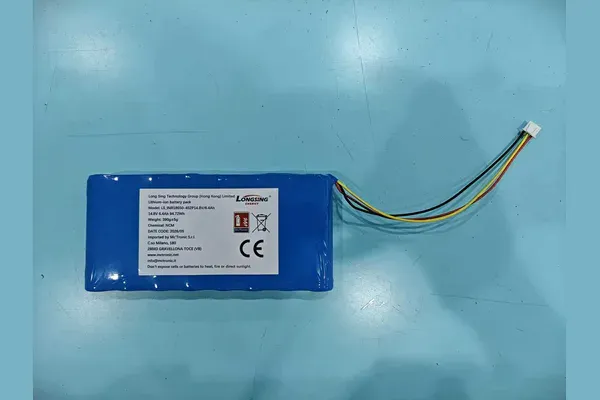
An IoT waste management OEM should provide enough information to reproduce the intended operating conditions. A supplier may need to evaluate:
- Required operating voltage, average current, and peak or pulse current
- Sensor measurement frequency, communication protocol, and data-transmission interval
- Expected field operating life and charging or replacement strategy
- Available installation space, cable length, connector type, and mechanical mounting requirements
- Outdoor temperature range, enclosure and sealing conditions
- Sample-testing requirements and acceptance criteria
These inputs support an energy budget, mechanical fit review, connection assessment, and representative validation plan. They also help distinguish a battery limitation from excessive network retries, unsuitable firmware settings, or unexpected field loads.
When Is an Application-Specific Battery Design Necessary?

A standard battery may be suitable when the electrical load, installation space, connector, environmental conditions, and maintenance expectations are conventional. A custom battery pack may be considered when unusual dimensions, communication current pulses, wiring, temperature exposure, mounting limits, service-life targets, or validation requirements cannot be addressed adequately by a standard option. Not every device requires customization.
Application-specific battery design should follow confirmed requirements and sample testing rather than assumptions. In smart waste management hardware, the objective is compatibility with the actual load profile and field environment, not customization for its own sake.
| Selection factor | Standard battery solution | Application-specific battery solution |
|---|---|---|
| Electrical load | Conventional profile | Unusual pulse or duty-cycle requirements |
| Mechanical fit | Standard space and mounting | Restricted dimensions or mounting interface |
| Wiring | Common cable and connector needs | Project-specific routing or connection needs |
| Validation | Standard qualification may be adequate | Representative application testing required |
Conclusion
Smart waste management can lower waste collection costs by turning real-time container status into on-demand service and more efficient routes. However, those decisions depend on continuous, credible field data, so reliable power supports both maintenance intervals and lifecycle performance. LONGSINGX invites smart waste device manufacturers, IoT OEMs, and solution providers to discuss standard or customized battery requirements for their operating profile and validation needs.
Frequently Asked Questions
Click to explore more information about smart waste monitoring and collection efficiency
Q: What is smart waste management?
A: Smart waste management uses sensors, wireless connectivity, cloud software, and operational rules to monitor container status. It helps operators replace purely fixed schedules with collection decisions based on real-time fill-level data and actual service demand.
Q: How can connected waste bins reduce operating costs?
A: Connected bins may help operators avoid unnecessary stops, prioritize nearly full containers, improve route planning, and use vehicles and collection crews more efficiently. Actual savings depend on route density, container numbers, network coverage, local waste patterns, and existing practices.
Q: How do smart bins support dynamic route planning?
A: Fill-level sensors send container-status data through a controller and a network such as LoRaWAN or NB-IoT to a cloud platform. The platform identifies bins requiring service and helps operators plan routes around current demand and collection priorities.
Q: How long can a smart waste bin sensor battery last?
A: There is no universal battery-life figure. Service life depends on average and peak current, measurement frequency, transmission intervals, signal retries, operating temperature, self-discharge, connector resistance, battery aging, and the device’s actual duty cycle.
Q: Why can a smart bin sensor lose power earlier than expected?
A: Premature power loss may result from underestimated communication pulses, low-temperature performance, frequent network retries, connection losses, unsuitable battery configuration, or higher-than-expected device activity. Current logging and environmental testing can help identify the cause.
Q: Does every smart waste device require battery customization?
A: No. A standard battery may be suitable when the voltage, load profile, installation space, connector, temperature range, and maintenance interval are conventional. An application-specific solution may be considered when unusual electrical, mechanical, environmental, or validation requirements apply.
Reference:
[1] Review global municipal waste-management costs and long-term cost projections.↪
[2] Review EU municipal waste generation statistics and 2024 waste data.↪
[3] Understand how LoRaWAN supports real-time bin monitoring and smart waste collection.↪
[4] Review how NB-IoT supports low-power and long-duration connected devices.↪
[5] Explore how fill-level data and connected bins can support waste collection optimization.↪
[6] Review how device current consumption and load profiles influence battery-life estimates.↪