
Are your automated fleets experiencing frequent downtime?
Many facility managers struggle with inadequate energy sources that halt production lines and increase maintenance costs. A custom agv battery system provides continuous power, eliminating workflow interruptions and ensuring your logistics run smoothly.
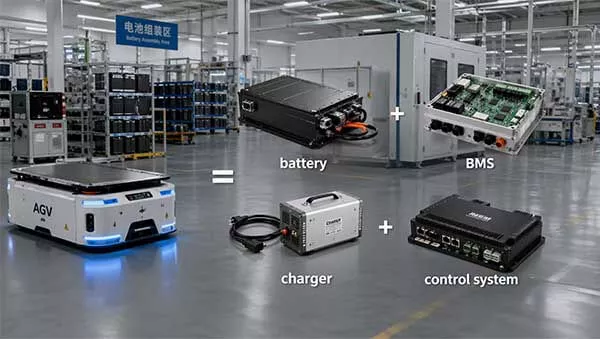
Customizing an AGV battery pack requires aligning cell chemistry, voltage, and capacity with the specific duty cycle of the vehicle. Engineers must integrate a compatible Battery Management System (BMS) for real-time communication with the central controller.
A properly customized agv battery system ensures optimal space utilization, meets necessary safety certifications, and provides a reliable automated guided vehicle power supply for industrial environments.
Upgrading to an engineered lithium solution directly prevents costly bottlenecks. We will explore the technical configurations that keep your vehicles operating efficiently below.
Table of Contents
- What Defines an Effective AGV battery system for Integration?
- How Do Charging Strategies Impact Fleet Efficiency?
- Where Are Custom AGV Battery Solutions Applied?
- How to Select the Right AGV Battery Supplier?
1. What Defines an Effective AGV battery system for Integration?
An effective AGV battery system features high energy density cells, a robust casing, and a smart BMS capable of CAN bus communication[1]. These elements work together to deliver consistent voltage, monitor cell health, and communicate operational status to the vehicle controller.
Upgrading from legacy technologies to a modern AGV lithium battery ensures faster charging times and longer cycle life.
Many system integrators face the problem of unpredictable voltage drops during heavy lifting tasks. When we analyze this issue, we often find that generic power units lack the necessary discharge rate capabilities.
As an AGV lithium battery manufacturer, we solve this by engineering a custom LiFePO4 AGV pack designed for high pulse currents. We verify this performance through rigorous load testing in simulated warehouse environments.
AGV Battery Types Compared (Industrial Perspective)
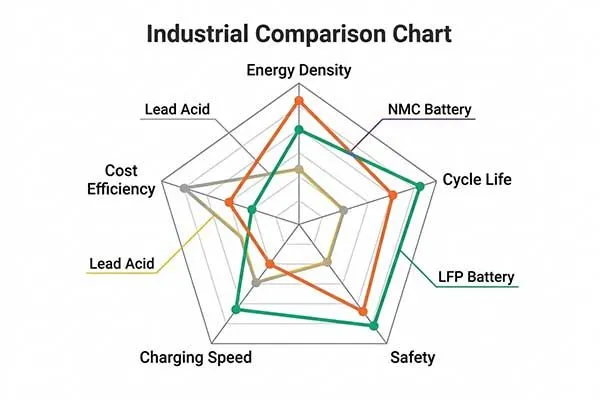
Critical thinking requires us to evaluate the debate of lithium vs lead acid[2]. Lead-acid units are inexpensive upfront but suffer from severe voltage sag under load and require heavy maintenance.
Conversely, an AGV lithium battery provides flat discharge curves and zero maintenance, directly supporting the goal of customizing AGV battery packs for system-level integration.
| Parameter | Lead Acid Battery | NMC Battery (Li-NMC) | LFP Battery (LiFePO4) | Importance for AGV |
|---|---|---|---|---|
| Chemistry | Lead Dioxide / Sponge Lead | Nickel Manganese Cobalt | Lithium Iron Phosphate | Base material characteristics |
| Energy Density | Low (30 – 40 Wh/kg) | High (150 – 220 Wh/kg) | Medium (90 – 120 Wh/kg) | Determines AGV size & payload capacity |
| Cycle Life | Short (500 – 1,000 cycles) | Medium (1,500 – 2,000 cycles) | Long (2,000 – 6,000+ cycles) | Impacts long-term replacement frequency |
| Charging Time | Slow (8 – 10 hours) | Fast (1 – 2 hours) | Fast (1 – 2 hours) | Opportunity charging capability |
| Efficiency | Low (~60 – 80%) | High (~90 – 95%) | High (~90 – 95%) | Energy loss during charge/discharge |
| DoD (Depth of Discharge) | Shallow (50% recommended) | Deep (80 – 90%) | Deep (80 – 90%) | Usable capacity per cycle |
| Safety (Thermal Stability) | Low (Risk of acid leakage) | Medium (Risk of thermal runaway) | High (Very stable, resistant to fire) | Warehouse safety standards |
| Maintenance | High (Requires watering/eq. charge) | Low (BMS management only) | Low (BMS management only) | Labor costs for fleet maintenance |
| Temperature Performance | Poor in cold, degrades in heat | Moderate | Good (Wide operating range) | Warehouse/Freezer environment |
| Upfront Cost | Low | High | Medium | Initial CAPEX budget |
| Total Cost of Ownership | High (Frequent replacement) | Medium | Low | Long-term OPEX calculation |
Smart BMS & Communication (CANopen/RS485)
The automated guided vehicle power supply must communicate flawlessly. We integrate an advanced AGV battery monitoring system that utilizes CANopen protocols[3]. This allows the master controller to read State of Charge (SOC) and State of Health (SOH) instantly.
Compliance & Certifications
To deploy these systems globally, engineers must secure UN38.3, CE, and UL certifications. This procedure guarantees the agv battery system remains safe under extreme mechanical shock and vibration.
Engineer Your AGV Power System
Optimize integration, not just cells.
2. How Do Charging Strategies Impact Fleet Efficiency?
Charging strategies directly dictate the operational availability of an automated fleet. Opportunity charging during short idle periods maintains battery levels without full shutdowns, while battery swapping[4] minimizes downtime for continuous operations.
Implementing the correct AGV battery charger ensures optimal energy transfer, reduces thermal stress[5] on the cells, and extends the overall lifespan of the AGV battery systems.
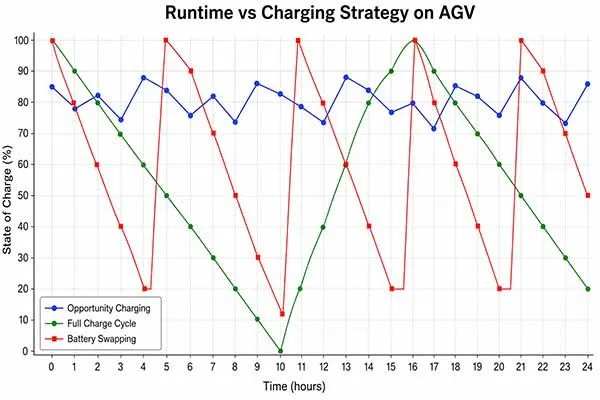
The primary problem fleet operators encounter is shift interruption due to depleted energy reserves. Our analysis shows that a poorly designed agv battery charging system forces vehicles offline for hours.
Our solution involves deploying high-current opportunity charging profiles[6] tailored to the specific AGV robot battery chemistry. We verify this by tracking fleet uptime metrics over a 90-day operational period, ensuring customizing AGV battery packs meets strict efficiency goals.
Charging Station Connection
The physical and digital handshake between the vehicle and the charging dock is critical. Engineers must specify contactors that handle high amperages without arcing.
Based on different charging methods, here are the ports and interfaces used between the AGV and the charging station:
- Contact Charging (Brush & Block)
- Automatic Docking (Plug & Socket)
- Wireless Charging[7]
- Communication Ports (For Handshake)
The BMS communicates directly with the charging station to negotiate current limits based on real-time cell temperatures. This communication loop prevents thermal runaway and ensures the agv battery system operates safely.
Total Cost of Ownership (TCO) Model
Evaluating the Capex and Opex reveals the true value of advanced AGV battery systems. While the initial cost of a custom AGV battery pack is higher, the dramatic reduction in downtime costs offsets this investment within the first year.
| Cost Factor | Traditional Charging | Opportunity Charging |
|---|---|---|
| Initial Setup (Capex) | Lower | Higher |
| Battery Replacement (Opex) | High (frequent) | Low (extended life) |
| Fleet Downtime | 15% of shift | < 2% of shift |
Using the correct agv battery system design ensures maximum return on investment.
3. Where Are Custom AGV Battery Solutions Applied?
Custom AGV battery solutions are primarily applied in modern warehousing, automotive manufacturing, and cold chain logistics. Each environment dictates specific thermal, vibration, and capacity requirements.
| Basic AGV Types | Handling-Based AGV Types | Navigation-Based AGV Types | Advanced / Modern Variants | Special Application AGVs |
|---|---|---|---|---|
| Tugger AGV (Towing AGV) | Pallet Truck AGV | Magnetic Tape Guided AGV | Autonomous Mobile Robot (AMR)[8] | Cleanroom AGV |
| Unit Load AGV | Conveyor AGV (Roller Bed AGV) | Laser Guided AGV | Collaborative Mobile Robot (CMR) | Explosion-Proof AGV (ATEX AGV)[9] |
| Forklift AGV | Heavy Load AGV | Vision Guided AGV (SLAM AGV) | Swarm AGV System | Hospital AGV |
| Assembly Line AGV | Lift AGV (Scissor Lift AGV) | QR Code / Landmark Guided AGV | Mobile Manipulator (AGV with Robotic Arm) | Outdoor AGV |
By tailoring the chemistry and housing of the automated guided vehicle power supply, operators can maintain high throughput regardless of extreme temperatures or heavy payloads, proving the versatility of a custom agv battery system.
Complex logistics networks often struggle with equipment compatibility and fault management. When we analyzed a major project in Germany, standard power units failed under continuous heavy loads.
Our engineering team, led by our chief engineer Jack Song from Long Sing Energy, designed a solution using high capacity AGV batteries. We verified the success through continuous operation logs showing zero thermal faults.
Match Battery to Real-World Loads
Built for your exact AGV scenario.
Case Study: Heavy Load AGV Battery Solution
We recently collaborated with a German warehouse automation integrator requiring power for High-load AGVs carrying 2-ton payloads. The problem was severe voltage drop during lift operations.
Our solution involved a custom 48V 150Ah LFP AGV robot battery pack with a specialized 200A continuous discharge BMS. We integrated CANopen protocols to ensure specific AGV brand compatibility, specifically mirroring the communication timing required by KUKA control systems.
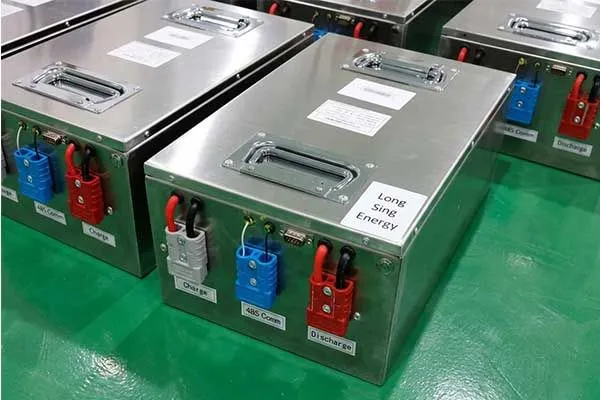
A critical part of customizing AGV battery packs involves post-deployment support. When the integrator faced a “CAN bus timeout” error, our troubleshooting guide identified a missing 120-ohm termination resistor on the harness, rapidly resolving the complex system integration issue.
This specialized agv battery system improved ROI by 30%.
Tips
System integration failures often originate from BMS mismatch.
4. How to Select the Right AGV Battery Supplier?
Selecting the right supplier involves evaluating their engineering capability, quality control processes, and post-sales technical support. A reliable partner will provide comprehensive testing data and lifecycle analysis for their AGV battery systems.
Evaluating their experience with specific communication protocols ensures the final AGV battery pack will integrate seamlessly with your existing automation infrastructure.
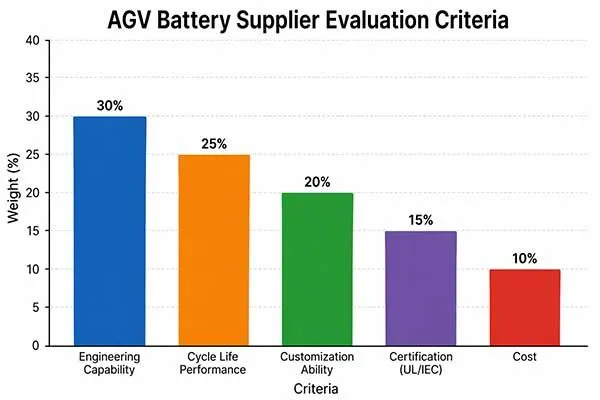
Procurement teams frequently encounter the problem of vendors supplying off-the-shelf units that fail in custom applications. Our analysis indicates that a lack of in-house BMS engineering causes most integration failures. The solution is using an agv battery selection guide to vet manufacturers based on their R&D capabilities.
Our sales manager, Luke Liu, emphasizes that a true partnership goes beyond the initial transaction. When customizing AGV battery packs, the supplier must understand the nuance of your specific automated guided vehicle power supply requirements.
Key Supplier Evaluation Criteria
| Evaluation Metric | Standard Vendor | Engineering Partner |
|---|---|---|
| BMS Customization | Pre-set limits only | Custom firmware & CAN protocols |
| Cell Sourcing | Spot market purchasing | Direct relationships with Tier-1 cell makers |
| Testing Protocols | Basic voltage checks | Full cycle, thermal, & vibration testing |
The best suppliers provide an AGV robot battery that functions as a fully integrated node within your larger automation network. These advanced AGV battery systems ensure your operation remains highly competitive.
Choose Proven Engineering Partners
Reduce risk with validated battery systems.
Conclusion
Designing the perfect agv battery system requires a rigorous engineering approach, from selecting the right cell chemistry to programming precise CAN bus communication.
By understanding how charging strategies affect total cost of ownership and carefully vetting your manufacturing partners, you can ensure your automated fleets operate without interruption.
Investing time in properly customizing these power units ultimately transforms your logistics infrastructure, yielding a highly efficient, reliable, and profitable automated guided vehicle operation.
Frequently Asked Questions
Click to explore more information about AGV Battery Systems
Q:What is an AGV battery?
A:An AGV battery is a rechargeable power source designed to supply energy to Automated Guided Vehicles (AGVs). These batteries are engineered for high efficiency, long cycle life, and stable output in industrial automation environments.
Q:What does AGV stand for?
A:AGV stands for Automated Guided Vehicle, which is a mobile robot used in industrial settings to transport materials without human intervention.
Q:What is the capacity of the AGV battery?
A:AGV battery capacity typically ranges from 20Ah to over 300Ah depending on the vehicle size, load requirements, and operational duration needed.
Q:How are AMR robots different from AGVs?
A:AMRs (Autonomous Mobile Robots) use advanced sensors and navigation systems to move dynamically, while AGVs follow fixed paths or predefined routes using guides such as wires or markers.
Q:What is the lifespan of an AGV robot?
A:An AGV robot typically has a lifespan of 8–15 years, depending on usage conditions, maintenance, and battery performance.
Q:What are the most common battery types used in AGVs?
A:The most common AGV battery types include lithium-ion (Li-ion), lithium iron phosphate (LFP), lead-acid, and AGM batteries, each offering different benefits in terms of cost, lifespan, and performance.
Q:What’s so special about AGM batteries?
A:AGM (Absorbent Glass Mat) batteries are spill-proof, maintenance-free, and provide reliable performance with good vibration resistance, making them suitable for certain AGV applications.
Q:How to choose the right battery for an AGV system?
A:Choosing the right AGV battery depends on factors such as load requirements, runtime, charging strategy, operating environment, and total cost of ownership. Long Sing Energy recommends evaluating both performance and lifecycle costs for optimal selection.
Keep Reading:
- Ultimate Robot Dog Battery Supplier Guide: From Prototype to Mass Production
- Industrial Robot Battery Solutions: How to Design a Reliable Battery System
- How to Maximize AMR Robot Battery Uptime: Fast-Charging and Swappable Lithium Battery Systems
- Humanoid Robot Power Systems: How Can Physical AI Overcome the Energy Bottleneck?
Reference:
[1]See how CAN bus enables real-time communication in AGV systems.↪
[2]Compare performance trade-offs for industrial battery upgrades.↪
[3]Enable seamless AGV-to-controller communication.↪
[4]Reduce downtime with rapid battery exchange solutions.↪
[5]Understand how heat impacts battery lifespan.↪
[6]Maximize uptime with smart partial charging strategies.↪
[7]Explore contactless charging for automated fleets.↪
[8]Explore flexible next-gen warehouse automation on AMR robot battery.↪