
Drone battery solutions play a critical role in elevating UAV performance by delivering high energy density, lightweight design, and stable power output required for extended flight time, higher payload capacity, and reliable operation in demanding aerial applications.
The rapid proliferation of Unmanned Aerial Vehicles (UAVs) across commercial, industrial, and recreational sectors has fundamentally changed how we interact with the sky. However, the true potential of any aerial platform is strictly dictated by its energy source.
Today, drone battery solutions are the primary focus of innovation, as they define the critical parameters of flight time, payload capacity, and operational efficiency. Without a robust and efficient battery for uav systems, even the most advanced carbon-fiber frame or high-resolution sensor remains grounded.
Introduction: The Power Behind the Propellers
In the modern drone era, battery technology is no longer just a peripheral component; it is the heart of the system. The transition from basic hobbyist models to sophisticated industrial drone batteries has required a leap in chemical stability and energy storage.
The challenge for any Drone battery manufacturer is to balance weight against power. Every extra gram of weight requires more UAV propulsion power to stay airborne, creating a diminishing return if the energy density is too low.
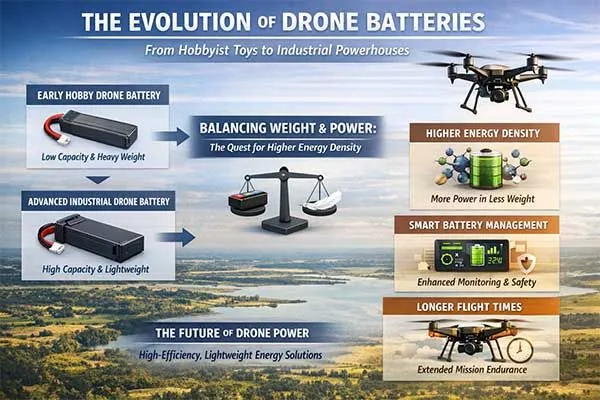
Consequently, the industry is shifting toward specialized drone battery solutions that offer higher gravimetric energy densities and smarter management systems.
Energy Density Optimization: Pushing the Limits
The most critical metric for long-endurance flight is energy density, measured in Wh/Kg. To keep UAVs airborne for extended periods, engineers prioritize UAV lithium-ion batteries that pack more watt-hours into a lighter frame. High-performance cells currently strive to exceed 250-300 Wh/kg.
By utilizing high energy density LiPo (Lithium Polymer) chemistry or advanced Silicon-anode lithium-ion cells, operators can achieve 30% to 50% longer flight times compared to standard consumer-grade packs. This optimization is what allows a mapping uav battery to cover hundreds of acres in a single mission rather than requiring frequent landings for swaps.
Comparison of Standard vs. High-End Battery Specs
| Battery Type | Energy Density (Wh/kg) | Typical Application | Weight Efficiency |
|---|---|---|---|
| Standard LiPo | 150 – 180 | Recreational Drones | Moderate |
| Advanced Li-ion | 240 – 280 | Professional Mapping | High |
| Long Sing Custom | 290+ | Long-Endurance UAVs | Excellent |
Burst Power Requirements: Engineering for Extremes
While energy density covers the “marathon” aspect of flight, drones also need to “sprint.” During takeoff, rapid climbing, or battling high winds, the battery pack drone must provide a massive burst of current without a significant voltage drop. This is known as the C-rating.
Professional batteries for drones are engineered with low internal resistance to handle these high-current demands. If a drone battery cannot sustain the required “burst power,” the flight controller may trigger a low-voltage failsafe, leading to a crash. Therefore, drone battery solutions must be hybrid in nature—offering both high capacity for duration and high discharge rates for agility.
Form Factor Flexibility and Aerodynamics
The shape of the uav batteries significantly impacts the drone’s center of gravity and aerodynamic profile. Traditional rectangular bricks often create drag or force awkward frame designs. Modern drone battery solutions now involve custom-shaped battery packs for drones that contour to the fuselage.
By integrating the lithium battery for drone systems into the structural arms or the main body cavity, manufacturers can reduce the frontal area, thereby decreasing wind resistance and further extending the effective range of the aircraft.
Specialized Applications and Product Integration
Different sectors require tailored drone battery solutions. A photography drone prioritizes steady voltage for gimbal stability, while agricultural UAV power packs must withstand high-vibration environments and rapid charging cycles.
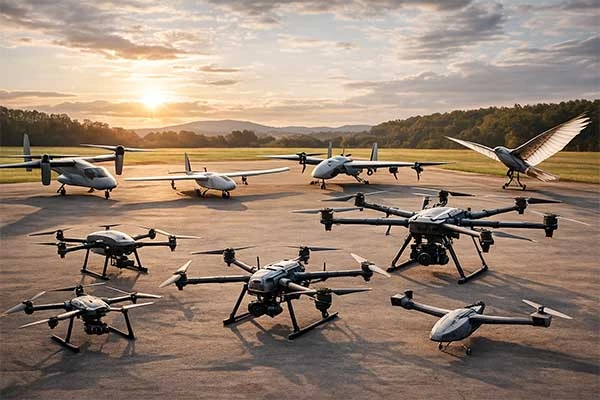
- Photography & Cinematography: Requires a reliable lithium battery for drones that offers precise telemetry to ensure the “hero shot” isn’t lost to a sudden power depletion.
- Agriculture: High-capacity batteries for drones are used to carry heavy liquid payloads for crop spraying.
- Delivery Drones: These systems require a battery for uav configurations that support thousands of cycles to keep operational costs low.
Powering Mobility Beyond the Sky
High-energy density battery technologies developed for drone battery solutions share core engineering principles with other advanced power applications.
In electric mobility and light electric vehicles, similar lithium-based chemistries enable compact designs with long driving range and high discharge efficiency.
For energy storage systems, these batteries provide stable voltage output and long cycle life, ensuring dependable backup and peak-shaving performance.
In power tools, high-rate discharge and thermal stability support instant torque and continuous operation, while recreational vehicles benefit from lightweight, space-efficient battery packs that extend off-grid endurance.
These cross-industry applications highlight how UAV battery innovation accelerates reliable, high-performance power solutions across multiple mobility and energy sectors.
Long Sing Energy: Leading the Charge in UAV Power
Long Sing Energy has established itself as a premier provider of high-performance UAV lithium-ion batteries. Their advantage lies in their proprietary cell chemistry and rigorous testing standards, which ensure safety even in extreme thermal conditions.
The Long Sing Advantage:
- Ultra-High Energy Density: Leveraging NCM and Silicon-carbon technologies to maximize flight windows.
- Custom BMS Integration: Advanced algorithms for State of Charge (SoC) and State of Health (SoH) monitoring.
- High Discharge Stability: Providing consistent UAV propulsion power even at low capacity levels.
Case Study Analysis
To understand the practical application of these technologies, let’s look at two specific Long Sing Energy battery configurations used in the field today:
| Drone Model Type | Battery Configuration | Voltage (V) | Capacity (mAh) | Total Energy (Wh) |
|---|---|---|---|---|
| Industrial Inspection | 6S1P High-Density | 22.2V | 16,000mAh | 355.2 Wh |
| Heavy-Lift Agriculture | 12S2P Power Pack | 44.4V | 32,000mAh | 1,420.8 Wh |
In the agricultural case, the 44.4V battery for uav allows the drone to carry a 20-liter payload for 15 minutes of continuous spraying, a feat that standard batteries for drones cannot achieve without overheating or premature degradation.
Smart Flight Batteries: The Intelligence Factor
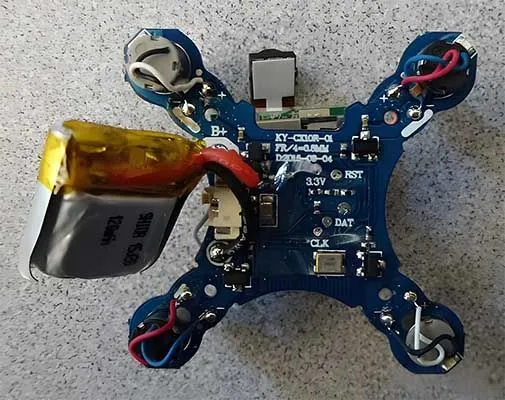
Modern UAV lithium-ion batteries are no longer “dumb” power sources. They are equipped with Integrated Circuitry (IC) that communicates directly with the drone’s flight controller. These “Smart” drone battery solutions provide:
- Real-time Cycle Counting: Tracking the age and wear of the drone battery.
- Cell Balancing: Automatically ensuring all cells stay at the same voltage for safety.
- Precise Flight Time Calculation: Calculating exactly how many seconds of flight remain based on current power draw and distance from the home point.
By using a smart uav battery, pilots can push the limits of their missions with the confidence that the battery pack drone will provide a clear warning long before the power reaches a critical state.
Conclusion
The future of unmanned flight is tethered directly to the evolution of the lithium battery for drones. As we move toward more autonomous and heavy-lifting applications, the demand for sophisticated drone battery solutions will only intensify. Companies like Long Sing Energy are at the forefront, proving that with the right energy density and smart management, the sky is no longer a limit, but a vast playground for innovation.
Whether you are looking for industrial drone batteries for infrastructure inspection or agricultural UAV power packs for precision farming, selecting the right battery for uav operations is the most important decision a drone operator can make.
Looking to elevate your UAV system with high-energy density drone battery solutions? Contact us today to discuss your custom battery requirements and request a tailored quotation.